
Navigation
Top News
Statistics
Advertisement
Аrchives
Votes
| Rate the site |
P00AF Trouble Code: Turbo Boost Control Module Performance Explained
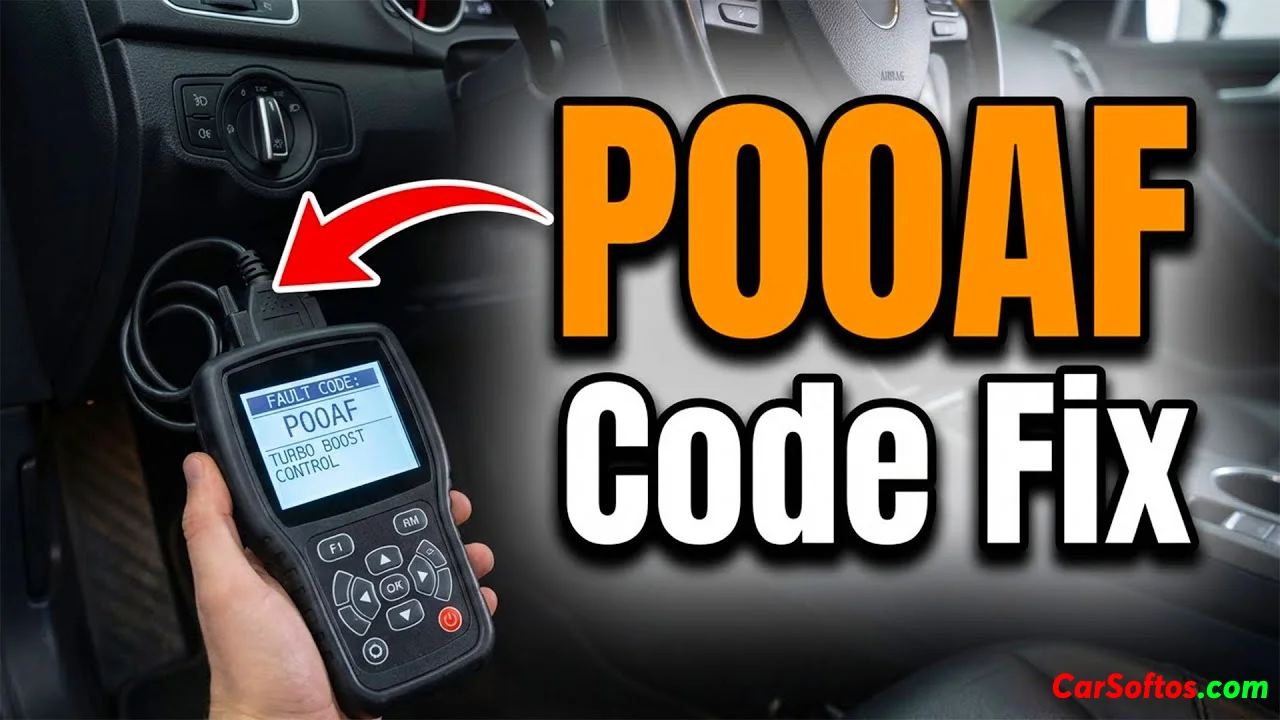
P00AF is a generic OBD-II code for “Turbocharger/Supercharger Boost Control ‘A’ Module Performance.” Multiple manufacturer bulletins and VAG references use essentially that same definition.
👉 In simple words:
- the ECU commands the turbo boost-control system
- but the actuator / control module / vane-control side is not responding the way it should
- so boost control becomes slow, inaccurate, or unstable. This is the common diagnostic meaning across the manufacturer material and VAG-focused references.
⚙️ What P00AF Usually Means in Real Life
On many turbo diesels and some other boosted engines, P00AF is commonly tied to the turbo actuator / boost control module, not just a raw pressure sensor problem. In VAG references, common causes include a defective N75, vacuum problems, sticking or seized VNT/VGT, or related sensor issues. Chrysler and Mercedes bulletins also group P00AF with actuator/module-type turbo faults such as P003A, P0046, P0234, and U010C.
👉 Simple explanation:
- P0236 / P0237 / P0238 are more about boost-sensor signal problems
- P00AF is more about the boost-control hardware/module performance side. This is an inference from how the codes are defined and grouped in manufacturer material.
⚠️ How Serious Is P00AF?
Severity: ⭐⭐⭐⭐☆ (Medium–High)
P00AF is not something to ignore. Manufacturer bulletins associate it with loss of power, MIL on, and in some cases limp mode or heavily reduced performance. Ross-Tech lists reduced engine performance as a symptom, and manufacturer bulletins group it with other serious turbo-control faults.
If the root cause is a sticking VGT, failed actuator, or low vacuum, continued driving can turn a smaller control fault into a more expensive turbo repair. That last sentence is an inference based on the documented causes and the function of the actuator-controlled turbo system.
🚨 Common Symptoms
Typical symptoms include:
- ⚠️ Check Engine Light
- ⚠️ reduced engine performance
- ⚠️ weak acceleration
- ⚠️ turbo not responding correctly
- ⚠️ glow plug light flashing on some VAG diesels
- ⚠️ limp mode or protective strategy on some vehicles. Ross-Tech explicitly lists MIL on, flashing glow plug light, and reduced engine performance.
🧠 Most Common Causes of P00AF
1️⃣ Faulty turbo actuator / boost control module
This is one of the biggest causes. Chrysler and Mercedes bulletins group P00AF with turbo actuator/module faults, and one Mercedes bulletin explicitly says the complete turbocharger should never be replaced for actuator/module faults when diagnosis points to the module itself.
2️⃣ Sticking or seized VNT / VGT mechanism
directly lists VNT sticking or seized as a possible cause. If the vanes cannot move freely, the actuator cannot control boost correctly and module performance faults can appear.
3️⃣ Vacuum leak or low vacuum
On vacuum-controlled turbo systems, lists vacuum leak or low vacuum as a common cause. That can stop the actuator from reaching commanded position.
4️⃣ Defective N75 / boost control solenoid
Ross-Tech specifically lists a defective N75 and even incorrect connector placement on a wrong 2-wire component as possible causes. That makes solenoid diagnosis very important on VAG setups.
5️⃣ Wiring / connector issue
Actuator and module performance faults can also come from damaged wiring, bad connectors, or a communication/control issue in the turbo actuator path. This is consistent with the manufacturer bulletins that group P00AF with actuator/module faults and communication faults like U010C.
6️⃣ Software / calibration issue on some applications
Volkswagen issued a bulletin for some 2013 2.0 TDI applications where ECM programming updates addressed P00AF-related diagnostic behavior. That means on some vehicles, software can be part of the repair path.
🔧 Step-by-Step Diagnosis
1️⃣ Scan all codes first
Check whether P00AF appears with related codes such as:
- P003A — Boost Control Module Position Exceeded Learning Limit
- P0046 — Turbo Boost Control Circuit Performance
- P0234 — Overboost
- U010C — Lost Communication With Turbo/Supercharger Control Module
- P0299 — Underboost
- P2563 — Boost Control Position Sensor Range/Performance. Manufacturer bulletins repeatedly group P00AF with these nearby turbo-control faults.
2️⃣ Check live data
Look at:
- requested boost
- actual boost
- actuator position if available
- vacuum command / duty cycle if your scan tool shows it. This is an inference from the way the fault is defined and from the performance nature of the actuator/module problem.
A strong clue is when the ECU asks for actuator movement but boost response or actuator position does not follow correctly. That pattern is consistent with module-performance faults.
3️⃣ Inspect vacuum lines and N75 / control solenoid
On VAG systems, to check:
- N75 condition
- correct connector routing
- vacuum leaks
- low vacuum. This makes vacuum-side checks one of the highest-value steps.
4️⃣ Test actuator movement
If your tool supports output tests or basic settings, verify that the turbo actuator moves smoothly and through full travel. Chrysler and Mercedes bulletins strongly suggest separating actuator/module diagnosis from full turbo replacement decisions.
5️⃣ Inspect VGT / vane mechanism
If the actuator is trying to move but the turbo mechanism is sticky, the vanes may be coked up or seized. Ross-Tech directly lists VNT sticking or seized as a cause.
6️⃣ Check for software updates where applicable
On some VW 2.0 TDI applications, updated ECM software was issued specifically for P00AF-related fault handling. That does not mean software is always the fix, but it should be checked on affected platforms.
🛠️ How to Fix P00AF
✔️ Repair vacuum leaks or low vacuum
If vacuum is weak or leaking, the actuator may never reach commanded position. Ross-Tech lists this directly.
✔️ Replace N75 / boost control solenoid
A bad N75 is a known VAG cause.
✔️ Repair actuator/module wiring or replace the actuator/module
Manufacturer bulletins show that many P00AF cases point to the actuator/module itself, and at least one Mercedes bulletin explicitly says not to replace the entire turbocharger when diagnosis leads only to the actuator/module.
✔️ Free up or repair sticking VGT / VNT mechanism
If the vanes are sticking, the control module may be fine while the turbo mechanism is the real problem. Ross-Tech supports this as a common cause.
✔️ Perform applicable ECM software update
On some VW applications, reprogramming is part of the official repair path.
💰 Typical Repair Cost
A practical estimate:
| Repair | Typical cost |
|---|---|
| Vacuum hose / small leak repair | $20–$150 |
| N75 / boost control solenoid | $60–$250 |
| Wiring / connector repair | $20–$200 |
| Actuator / module replacement | $200–$1,100 |
| Turbo cleaning / VGT service | $200–$700 |
| Full turbo replacement | $1,000–$3,500+ |
These are market-style ranges, not manufacturer flat-rate prices. The load-bearing point is that published bulletins and diagnostics strongly support checking the actuator/module first, because some cases do not require replacing the full turbo.
❗ Common Mistakes
❌ Replacing the turbo too early
This is one of the biggest mistakes. Mercedes guidance explicitly says the complete turbocharger should never be replaced when diagnosis shows the fault is in the actuator/module.
❌ Ignoring vacuum problems
Ross-Tech directly lists vacuum leak or low vacuum as a major cause.
❌ Skipping the N75 test
On VAG systems, a bad N75 or misconnected N75 connector is a documented cause.
❌ Forgetting software updates
VW issued a programming-related bulletin for some P00AF cases, so software should not be ignored on affected vehicles.
⚖️ P00AF vs Related Turbo Codes
P00AF
Boost control module/actuator performance fault.
P003A
Boost control module position exceeded learning limit — often very closely related to actuator/vane problems. Manufacturer bulletins group it with P00AF.
P0046
Turbo boost control circuit performance — another neighboring actuator/control-side code.
P2563
Boost control position sensor range/performance — more directly focused on feedback position. VAG TSBs and related diagnostics often put it in the same family.
👉 Simple explanation:
- P0236/P0237/P0238 = boost sensor signal side
- P2563 = actuator position feedback side
- P00AF = boost control module / actuator performance side. This is an inference from the code definitions and how manufacturers cluster them.
🚗 Can You Drive With P00AF?
Sometimes, briefly — but it is risky.
lists reduced performance, and manufacturer bulletins associate P00AF with serious turbo-control issues. If the vehicle has weak boost, flashing warning lights, or limp mode, it should be diagnosed soon.
📌 Final Verdict
P00AF usually means the turbo boost control module/actuator side is not performing correctly. The most common real causes are a bad actuator/module, vacuum leak or low vacuum, defective N75/boost control solenoid, sticking VGT/VNT vanes, wiring problems, or sometimes software/calibration issues on affected vehicles.

Tags:
Users of Guests are not allowed to comment this publication.