
Navigation
Top News
Statistics
Advertisement
Аrchives
Votes
| Rate the site |
P0430 Code (Bank 2 Catalyst Efficiency): Full Diagnostic Guide Before You Replace the Catalytic Converter
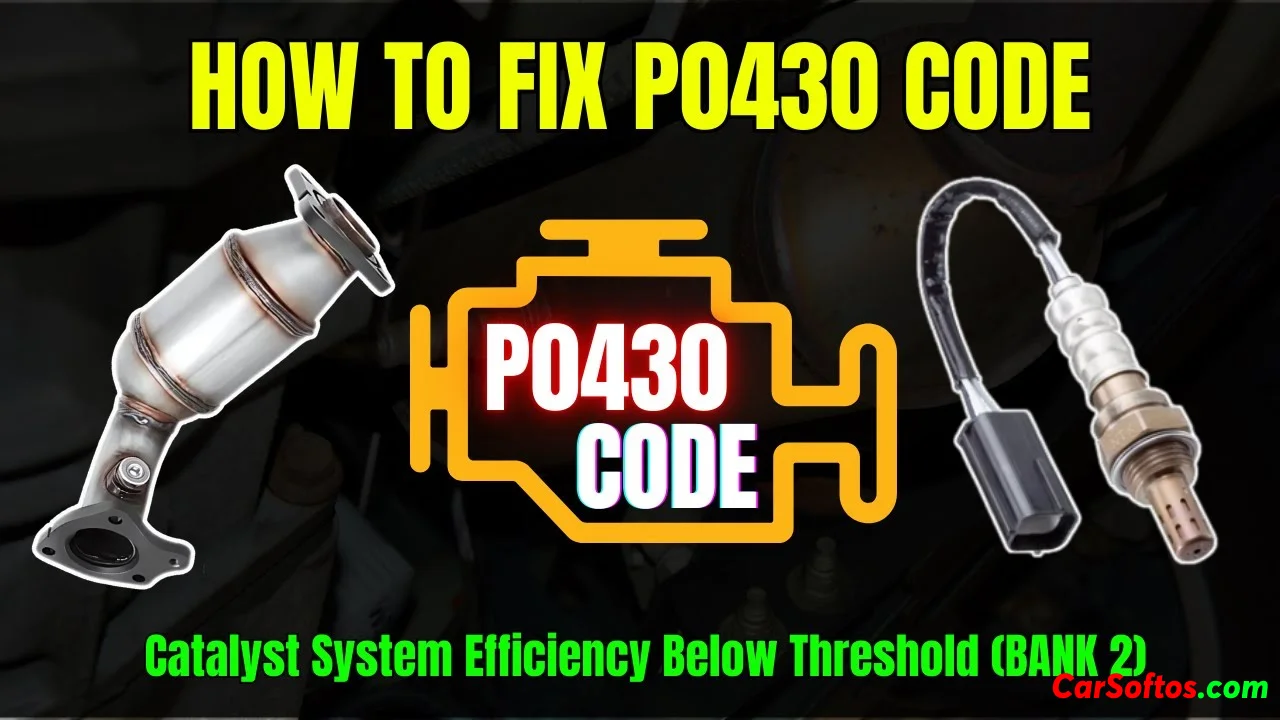
P0430 – Catalyst System Efficiency Below Threshold (Bank 2)
This code means the catalytic converter on Bank 2 is not cleaning exhaust gases efficiently enough.
Important:
-
Bank 2 exists only on V6, V8, V10 engines
-
Bank 2 is the side that does NOT contain cylinder #1
-
This is similar to P0420 (Bank 1), but affects the opposite side
👉Mechanics Report Increase in P0420 Error Code Cases – What Drivers Should Know (2026 Update)
👉P0420 Code – Catalyst System Efficiency Below Threshold (Bank 1) | Meaning, Causes, Symptoms & Fix
🔬 How the ECU Detects Catalyst Failure
Modern vehicles use:
-
Upstream O2 sensor (before catalyst)
-
Downstream O2 sensor (after catalyst)
The ECU compares their signals.
Normal catalyst behavior:
-
Upstream sensor fluctuates rapidly
-
Downstream sensor remains stable
When both sensors show similar switching patterns →
ECU determines catalyst efficiency is low → P0430 is set.
⚠ Why You Should NOT Replace the Converter Immediately
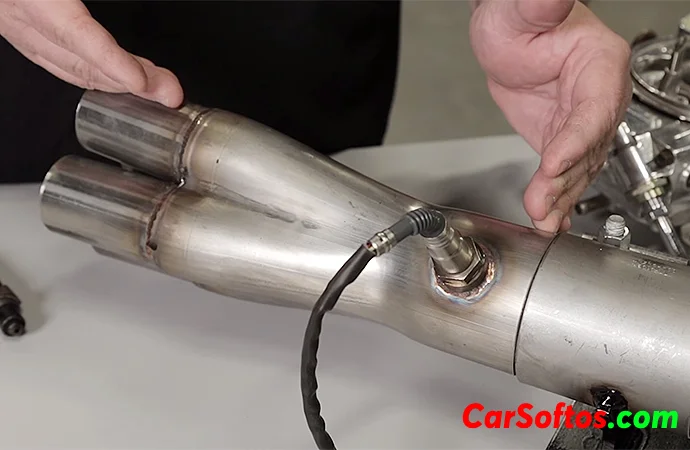
Many drivers replace the catalytic converter too quickly.
But P0430 can also be caused by:
-
exhaust leaks
-
failing O2 sensors
-
misfires
-
rich fuel mixture
-
oil burning
-
coolant contamination
The catalyst is often the victim — not the root cause.
🔎 Most Common Causes of P0430
1️⃣ Failing Catalytic Converter (High Mileage)
After 100,000–150,000 miles, internal catalyst material may degrade.
Symptoms:
-
reduced fuel economy
-
failed emissions test
-
slight power loss
2️⃣ Engine Misfires (P0300 Series)
Unburned fuel overheats and melts catalyst substrate.
👉P0300 Code Explained: Random Misfire — Causes, Diagnosis & How to Prevent Engine Damage
👉P0300 Code – Random / Multiple Cylinder Misfire (Meaning, Causes, Symptoms & Fix)
This is one of the fastest ways to destroy a converter.
3️⃣ Rich Fuel Condition (P0172 / P0175)
Excess fuel increases exhaust temperature.
Long-term rich operation damages catalyst.
4️⃣ Exhaust Leak Before or Near Bank 2 Converter
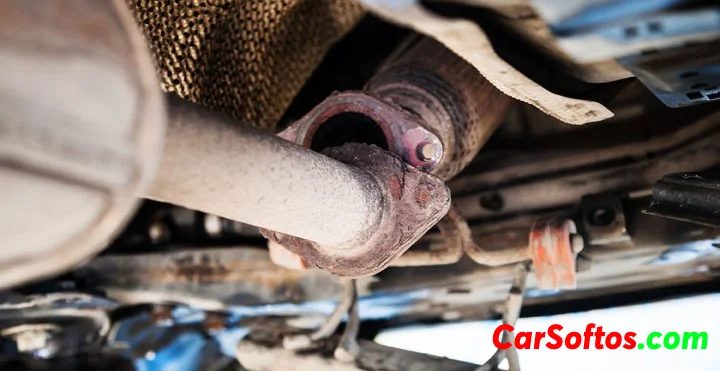
If air enters exhaust before downstream O2 sensor:
-
readings become inaccurate
-
ECU may falsely assume low efficiency
Always inspect for leaks first.
5️⃣ Faulty Downstream O2 Sensor (Bank 2 Sensor 2)
If downstream sensor responds too actively:
-
ECU believes catalyst is failing
Sensor response test confirms this.
⚙️ Professional Diagnostic Strategy
Step 1: Compare Upstream vs Downstream O2 Graph
Healthy catalyst:
-
Upstream = rapid switching
-
Downstream = smooth, stable
Failing catalyst:
-
Both sensors look similar
Live data graphing is critical.
Step 2: Check for Misfire History
Even old misfire events can damage the converter.
Review:
-
Freeze frame data
-
Misfire counters
Step 3: Check Fuel Trims
High negative trims (rich condition) may indicate root cause.
Fix fueling issue before replacing converter.
Step 4: Backpressure Test (Advanced)
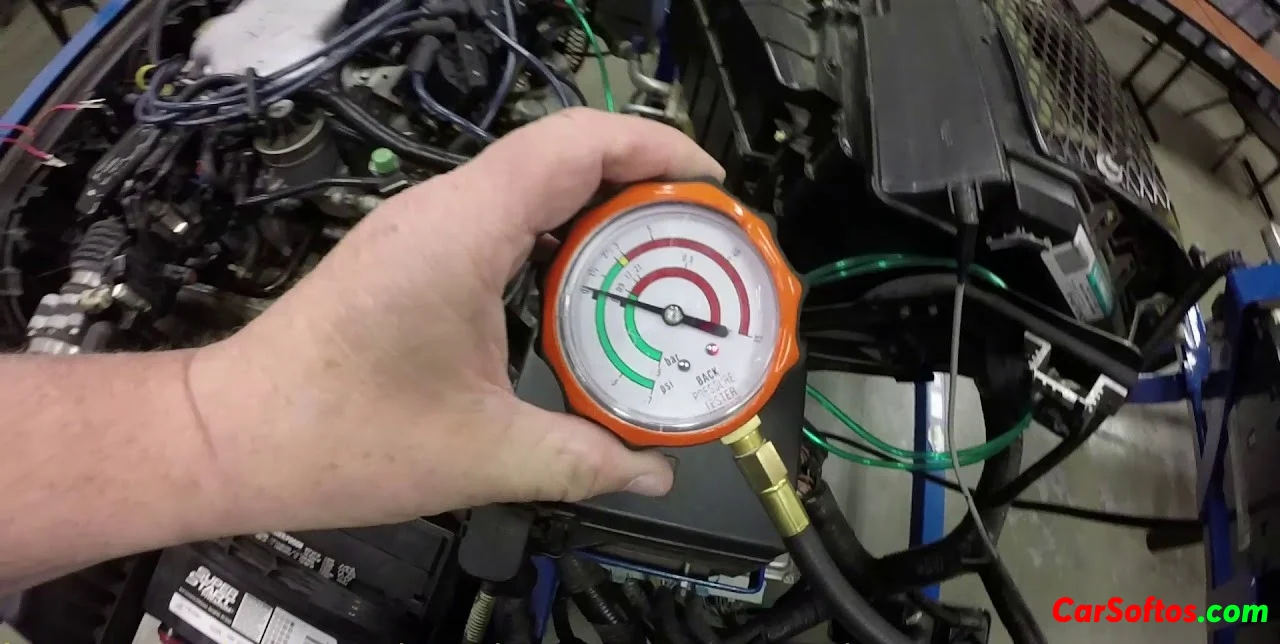
Clogged catalyst symptoms:
-
poor acceleration
-
overheating
-
excessive backpressure
Backpressure above spec confirms blockage.
🚨 Symptoms of P0430
-
check engine light
-
failed emissions
-
reduced power (late stage)
-
sulfur smell
-
rattling noise (broken substrate)
In early stages, car may run normally.
💰 Repair Costs
-
O2 sensor replacement: $150–400
-
Exhaust leak repair: $100–500
-
Aftermarket catalytic converter: $800–1500
-
OEM catalytic converter: $1500–4000+
-
Luxury vehicles: $3000–6000
High cost = high CPC opportunity.
❌ Common Diagnostic Mistakes
-
Replacing converter without checking misfires
-
Ignoring rich fuel condition
-
Not inspecting exhaust leaks
-
Not analyzing live O2 data
-
Using cheap universal converters (may trigger code again)
📊 Quick Comparison Table
| Situation | Likely Cause |
|---|---|
| Both banks show P0420 + P0430 | High mileage catalyst |
| Only Bank 2 shows code | Bank 2 issue localized |
| Misfire history present | Converter secondary damage |
| Rich fuel trims | Fueling issue |
| Exhaust noise near manifold | Leak |
FAQ
Is P0430 serious?
Yes, especially if misfires are present.
Can I drive with P0430?
Short-term yes, but prolonged driving risks damage.
How long does a catalytic converter last?
Typically 100,000–150,000 miles.
Will replacing O2 sensors fix P0430?
Only if the sensor is faulty — not if catalyst is degraded.
Final Thoughts
P0430 is not always “replace the catalytic converter.”
It is a catalyst efficiency warning on Bank 2.
Correct process:
➡ Check misfires
➡ Analyze fuel trims
➡ Inspect exhaust leaks
➡ Compare O2 data
➡ Replace converter only if confirmed
Accurate diagnosis prevents unnecessary $3000 repairs.

Tags:
Users of Guests are not allowed to comment this publication.