
Navigation
Top News
Statistics
Advertisement
Аrchives
Votes
| Rate the site |
P0300 Code Explained: Random Misfire — Causes, Diagnosis & How to Prevent Engine Damage
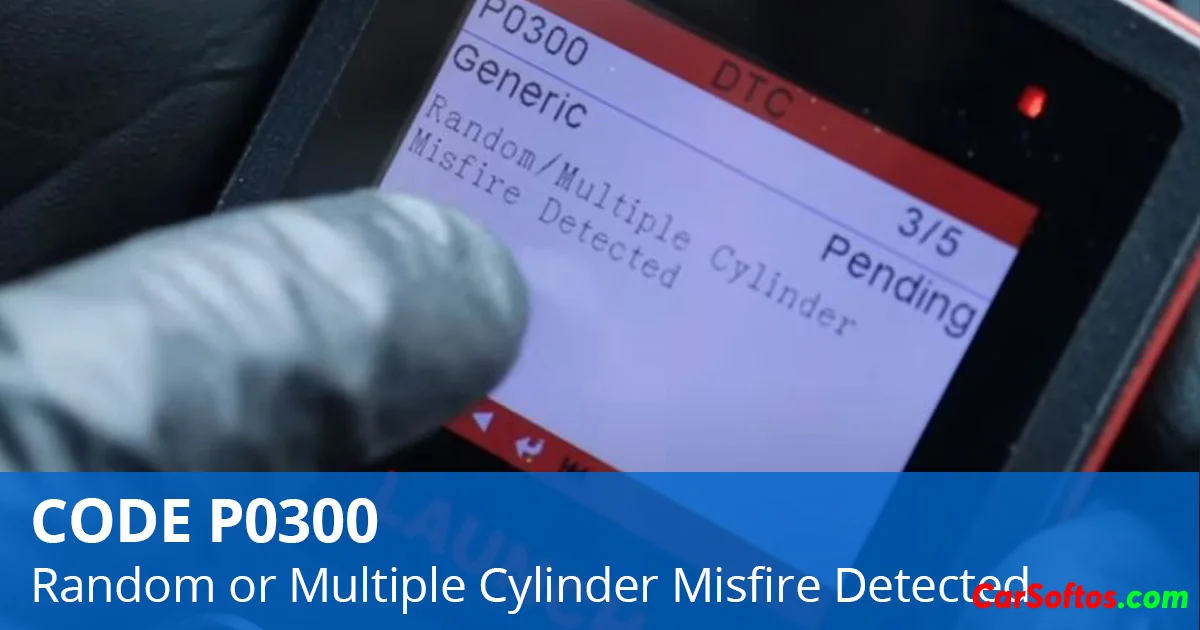
P0300 – Random/Multiple Cylinder Misfire Detected
This code means the engine control module (ECM) has detected misfires occurring randomly across multiple cylinders.
Unlike P0301–P0304 (specific cylinder misfires), P0300 indicates the issue is not limited to one cylinder.
This makes diagnosis more complex — and more important.
🔥 What Is an Engine Misfire?
A misfire happens when:
-
the air-fuel mixture fails to ignite properly
-
combustion is incomplete
-
ignition timing is disrupted
When misfires occur repeatedly, the ECM stores P0300.
If the Check Engine Light is flashing, it indicates active misfire that may damage the catalytic converter.
⚠ Why P0300 Is More Serious Than Many Other Codes
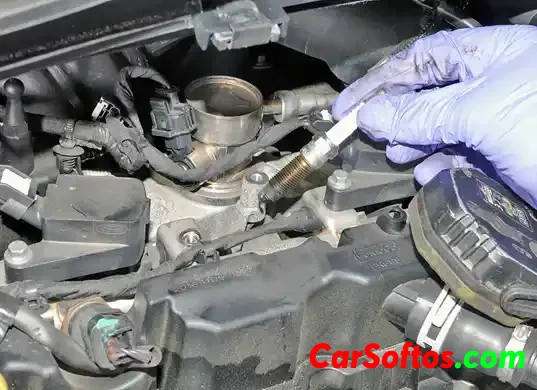
Unburned fuel enters the exhaust system.
This can:
-
overheat the catalytic converter
-
melt internal honeycomb structure
-
cause expensive exhaust damage
Ignoring P0300 can turn a $150 repair into a $3000 problem.
📊 How the ECM Detects Misfires
Modern vehicles monitor:
-
crankshaft speed variations
-
combustion timing
-
oxygen sensor data
-
fuel trim corrections
If crankshaft acceleration becomes inconsistent, the ECM detects which cylinders fail to fire.
If misfires are random across cylinders → P0300 is triggered.
🔎 The 6 Most Common Causes of P0300
1️⃣ Ignition System Problems (Most Common)
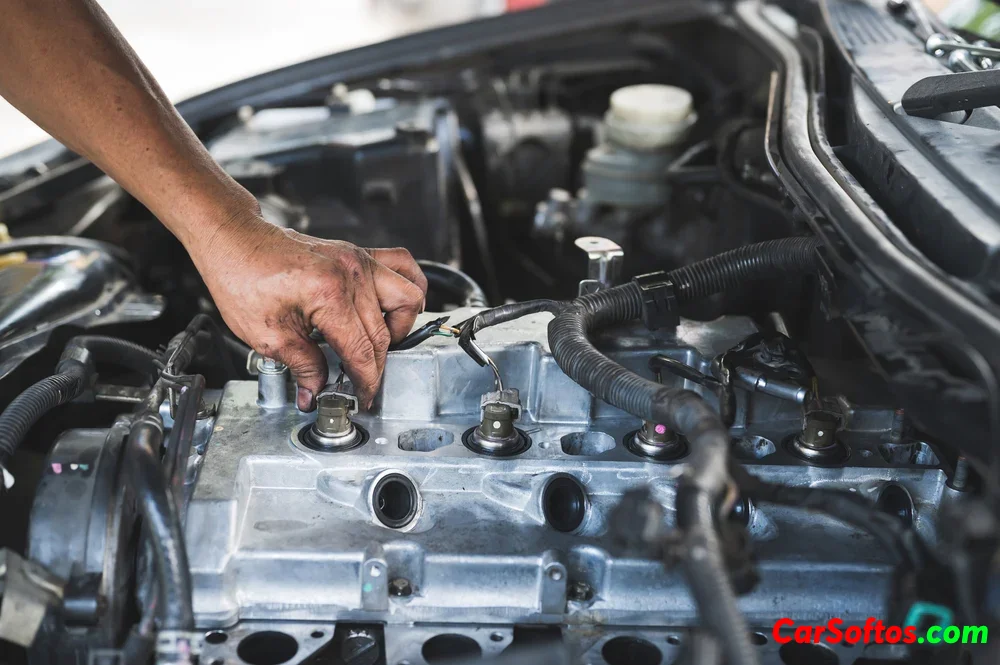
-
worn spark plugs
-
failing ignition coils
-
damaged plug wires
Random misfires often start with weak ignition components.
2️⃣ Lean Fuel Condition
If mixture is too lean:
-
combustion becomes unstable
-
misfires occur under load
👉P0171 Code (Bank 1 Lean): Complete Diagnostic Guide to Fixing a Lean Engine Condition
👉P0174 Code (Bank 2 Lean): Why Your Engine Is Running Too Lean
3️⃣ Fuel Delivery Issues
-
weak fuel pump
-
clogged injectors
-
low fuel pressure
Misfires often worsen during acceleration.
4️⃣ Vacuum Leaks
Unmetered air disrupts combustion balance.
Symptoms:
-
rough idle
-
high positive fuel trims
-
misfire mostly at idle
5️⃣ EGR System Problems
If EGR valve sticks open:
-
exhaust gas enters cylinder at wrong time
-
combustion destabilizes
6️⃣ Mechanical Engine Problems (Less Common but Serious)
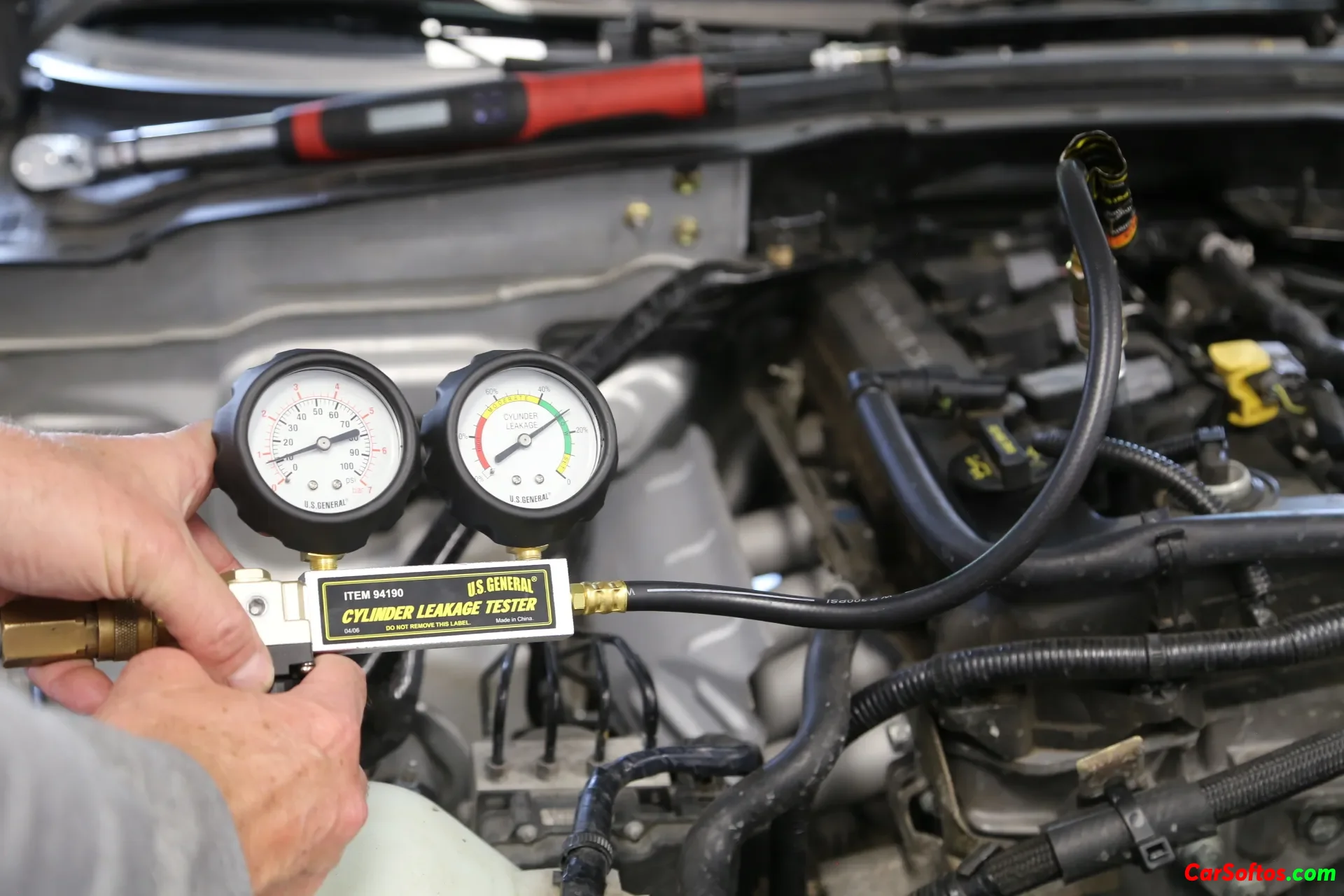
-
low compression
-
burnt valves
-
timing chain issues
-
head gasket problems
Mechanical causes usually show consistent misfire patterns.
⚙️ Professional Diagnostic Workflow
Step 1: Check Freeze Frame Data
Look at:
-
RPM
-
load
-
temperature
-
fuel trims
Was the misfire under load or at idle?
Step 2: Monitor Live Misfire Counters
Modern scanners show:
-
misfires per cylinder
-
total misfire count
If one cylinder misfires most → check that cylinder first.
Step 3: Inspect Fuel Trims
High positive trims → lean condition.
Negative trims → rich condition.
Misfires often follow fuel imbalance.
Step 4: Perform Compression Test (If Needed)
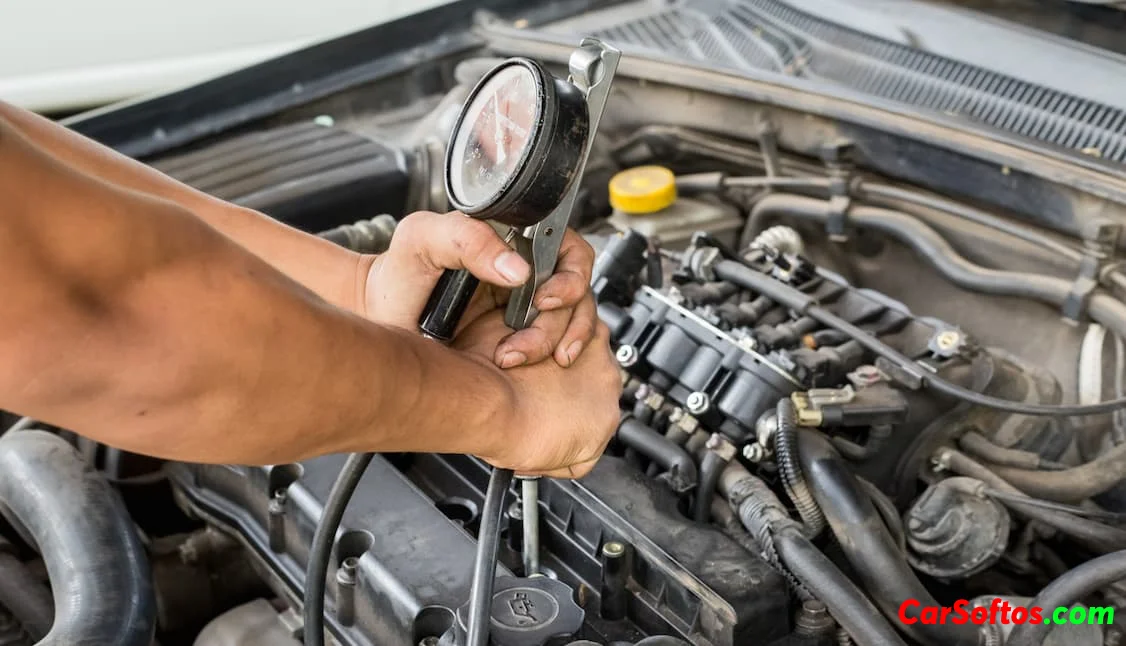
Low compression indicates mechanical problem.
🚨 Symptoms of P0300
-
rough idle
-
engine shaking
-
hesitation
-
power loss
-
poor fuel economy
-
flashing Check Engine Light
Sometimes vehicle drives normally until under load.
💰 Repair Costs
-
Spark plug replacement: $100–300
-
Ignition coil replacement: $150–400
-
Fuel injector replacement: $150–500
-
Fuel pump replacement: $500–1500
-
Catalytic converter replacement (if damaged): $1500–4000
Early repair is much cheaper.
❌ Most Common Misdiagnosis Errors
-
Replacing all coils at once
-
Ignoring fuel trims
-
Not checking for vacuum leaks
-
Clearing code without monitoring misfire counters
-
Replacing catalytic converter without fixing root cause
📊 Quick Diagnosis Table
| Symptom | Likely Cause |
|---|---|
| Misfire at idle only | Vacuum leak |
| Misfire under load | Fuel pressure |
| Random misfires cold start | Ignition coils |
| Misfire + lean codes | Air leak |
| Misfire + rich smell | Injector issue |
FAQ
Is P0300 serious?
Yes, especially if the light flashes.
Can I drive with P0300?
Short distance only — prolonged driving may damage the catalytic converter.
What causes random misfires?
Ignition, fuel, vacuum leaks, or mechanical issues.
Does P0300 mean all cylinders are bad?
No — it means misfires occur randomly.
Final Thoughts
P0300 is not just “replace spark plugs.”
It is a combustion instability warning.
Correct approach:
➡ Check ignition first
➡ Analyze fuel trims
➡ Inspect fuel pressure
➡ Confirm compression
Proper diagnosis prevents expensive catalytic converter damage.

Tags:
Users of Guests are not allowed to comment this publication.