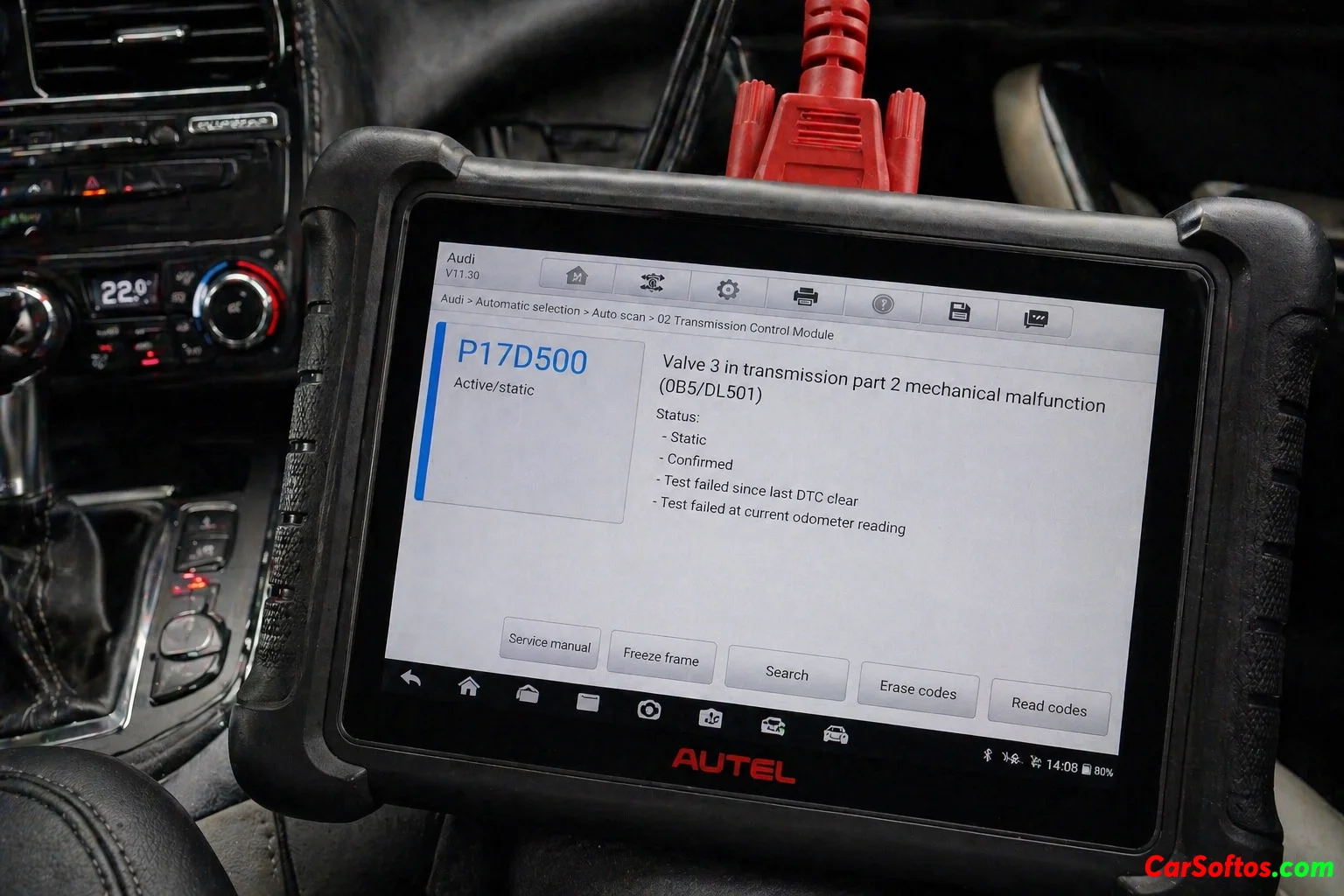
P17D5 is a VAG / Audi-specific transmission fault code most commonly linked to the Audi 0B5 / DL501 7-speed S tronic gearbox.

| Rate the site |
P17D5 is a VAG / Audi-specific transmission fault code most commonly linked to the Audi 0B5 / DL501 7-speed S tronic gearbox.

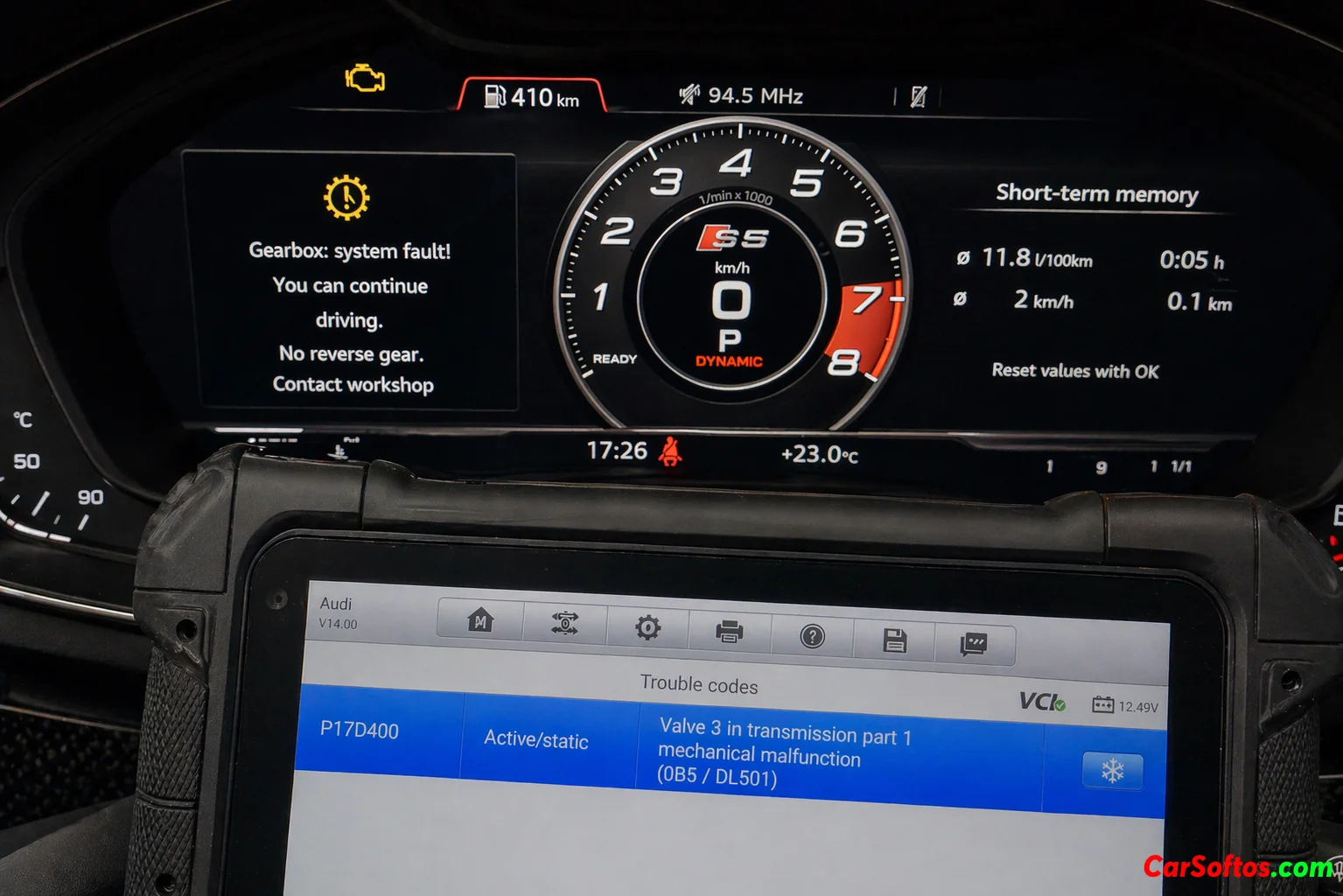
P17D4 is a VAG / Audi-specific transmission fault code, most commonly discussed on Audi vehicles with the 0B5 / DL501 7-speed S tronic transmission.
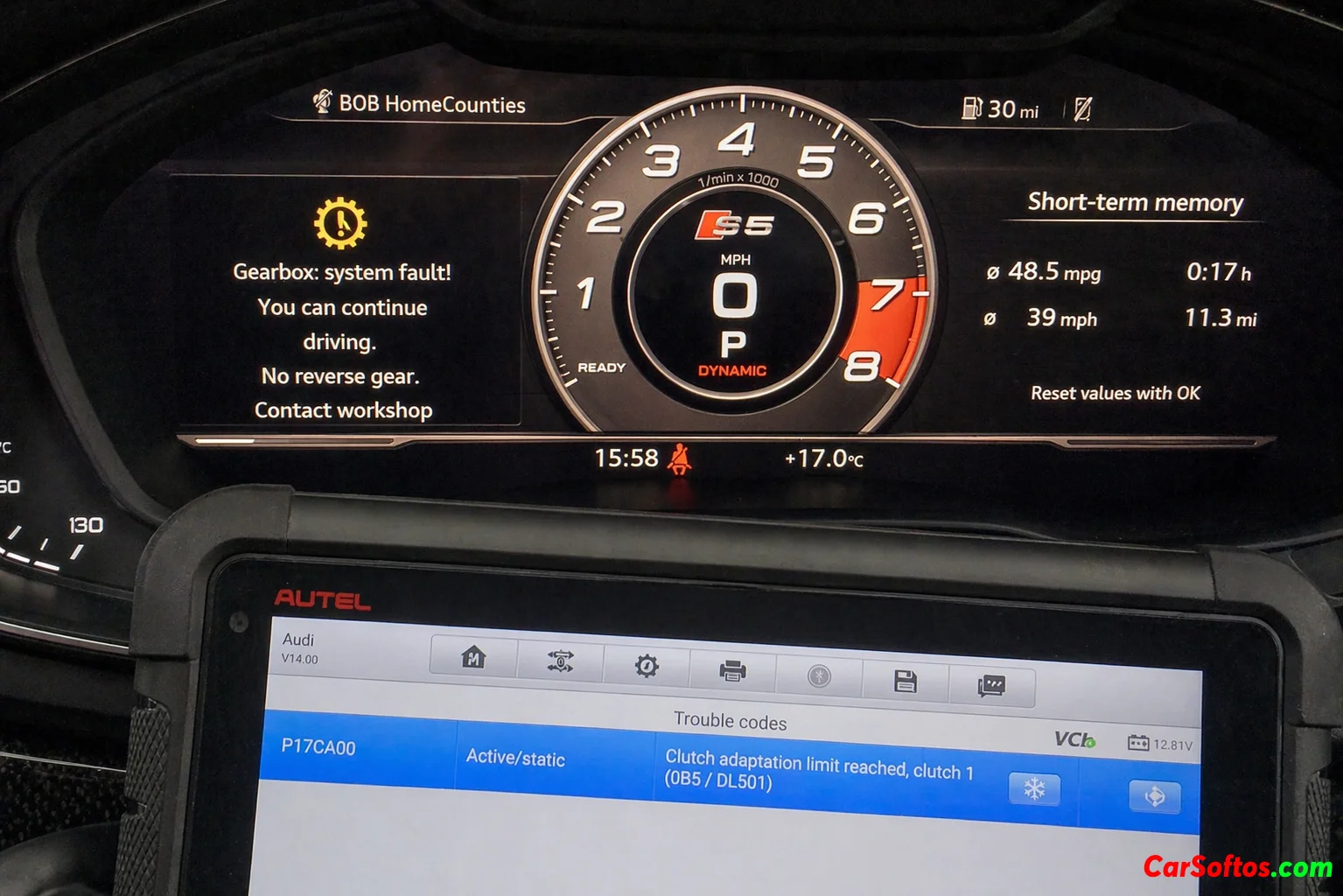
P17CA (VAG-specific) typically indicates:
👉 Clutch adaptation limit reached / adaptation not possible
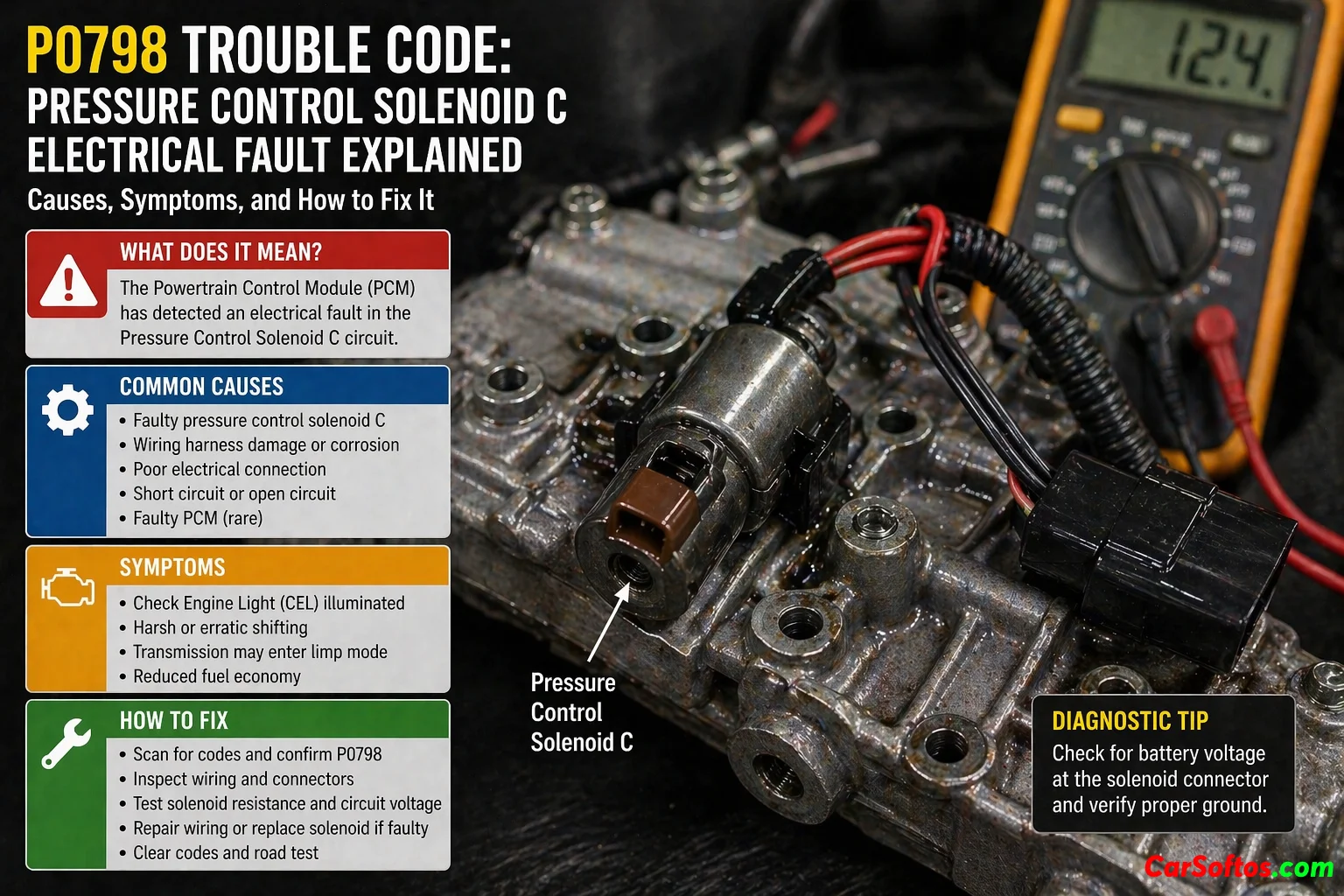
P0798 means Pressure Control Solenoid “C” Electrical. Toyota-style OEM service material for this code family uses the electrical-fault wording when the controller detects an open or short circuit in the solenoid path. One Toyota/Lexus document for the related pressure-control-solenoid C electrical fault states that when an open or short circuit occurs in the solenoid circuit, the ECM detects the issue, stores the code, and activates a fail-safe strategy.
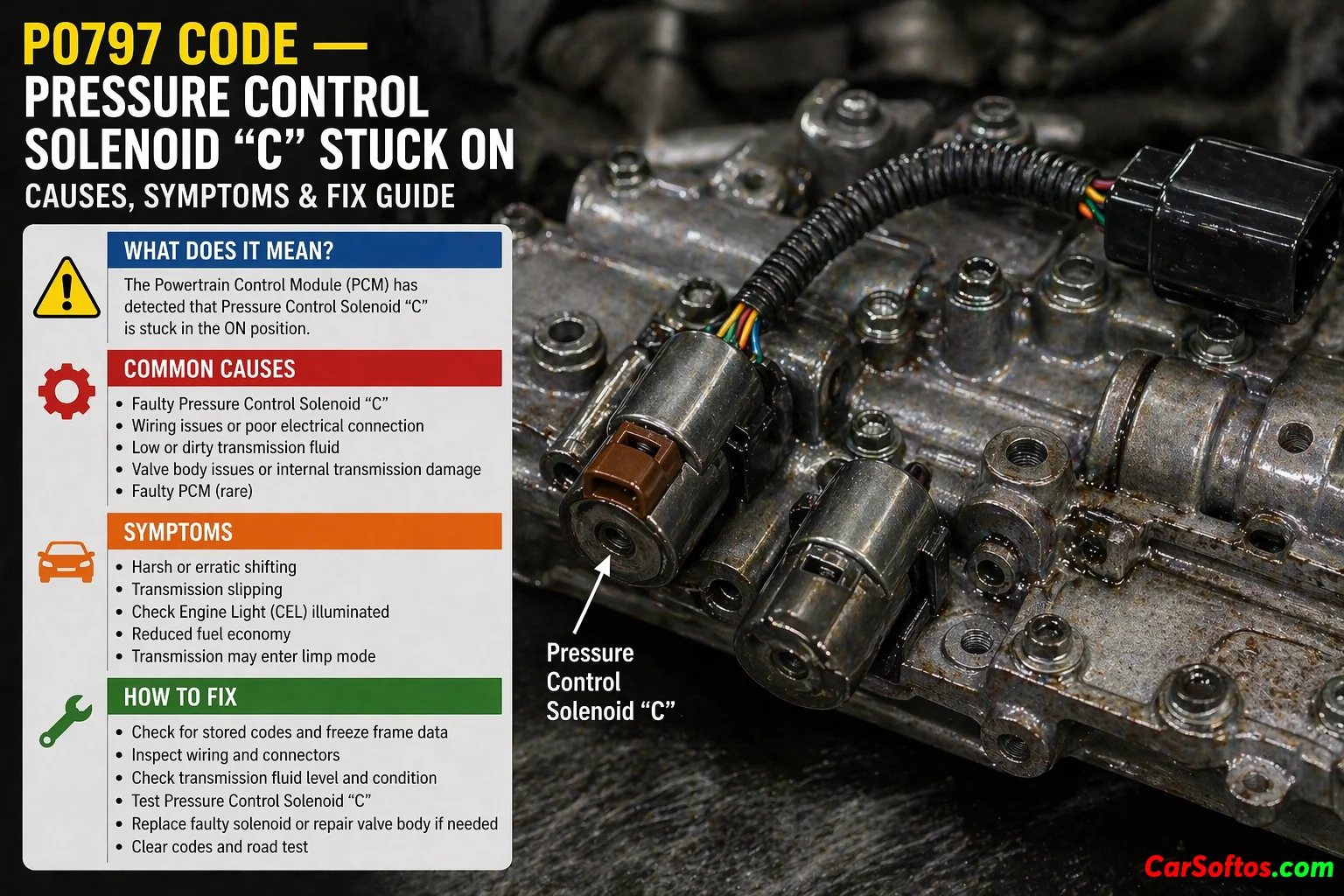
P0797 means Pressure Control Solenoid “C” is stuck on. In practice, the transmission controller commands pressure control through solenoid C, but the hydraulic response stays on when it should not, or line pressure does not follow the expected control strategy. Generic references describe it as a mismatch between commanded and actual pressure control behavior.
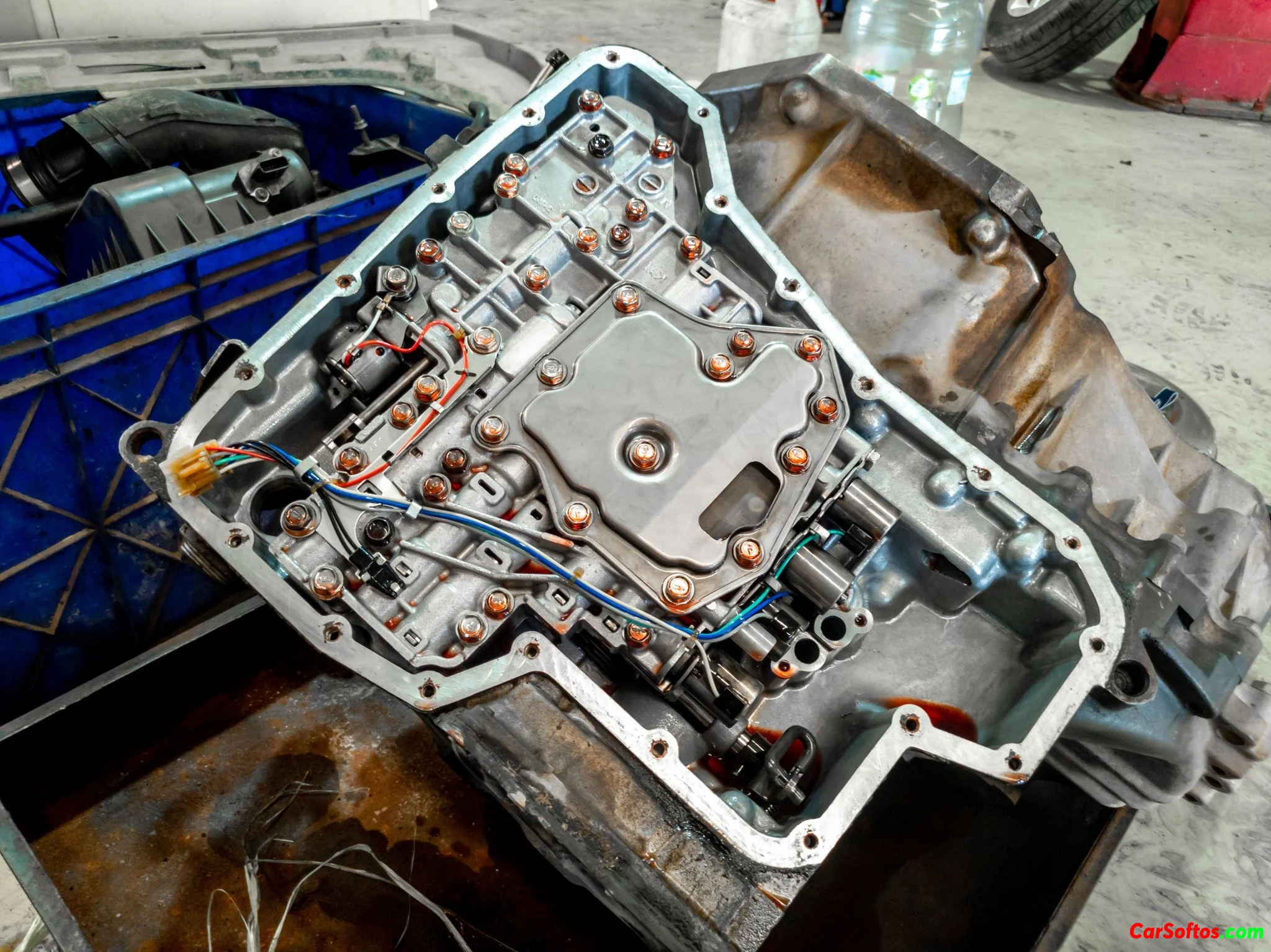
P0796 = Pressure Control Solenoid “C” Performance or Stuck Off
👉 The transmission computer controls line pressure using pressure control solenoids.
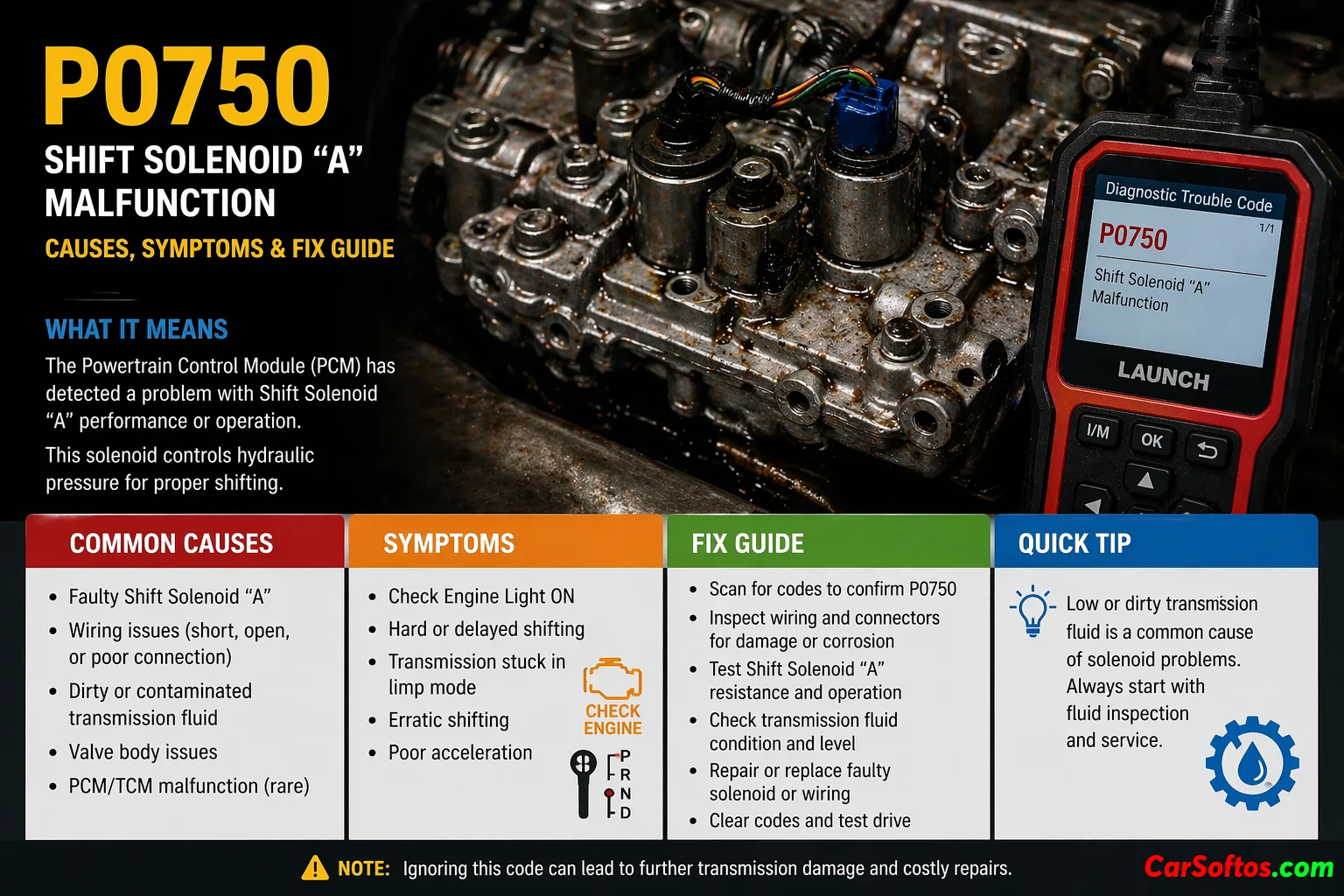
P0750 is the generic OBD-II code for Shift Solenoid “A” Malfunction. In Toyota factory manuals, this is described as shift solenoid valve SL1 / S1 malfunction, and the usual fault tree includes a stuck-open or stuck-closed solenoid, a blocked or sticking valve body passage, ECM issues, torque-converter-clutch-related faults, or internal automatic transaxle problems.
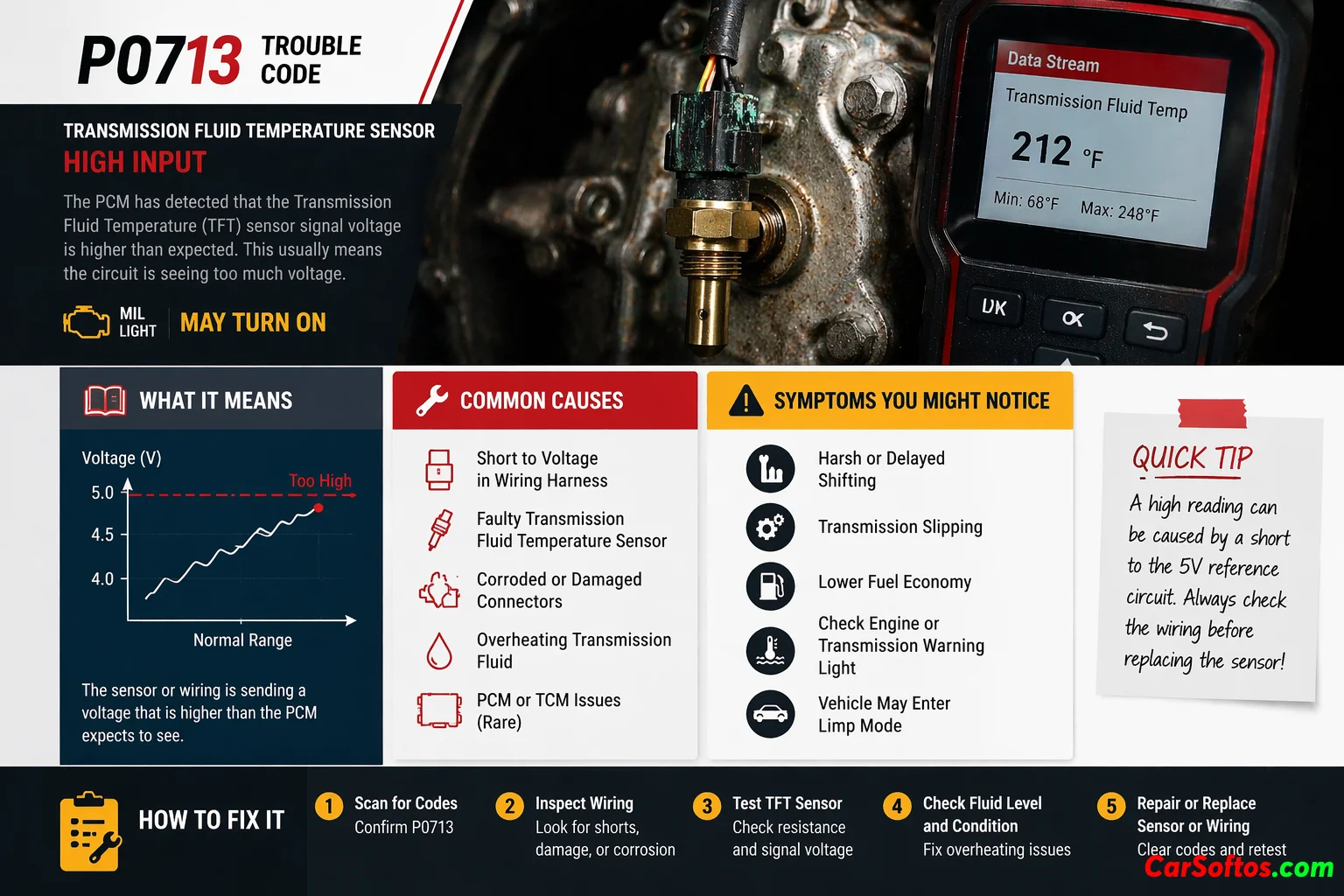
P0713 is the generic OBD-II code for Transmission Fluid Temperature Sensor “A” Circuit High Input. OEM-style service material uses that definition consistently, and Toyota transmission diagnostics place P0713 in the same family as P0711 and P0712, but specifically as the high-input version of the transmission fluid temperature sensor fault.