
Navigation
Top News
Statistics
Advertisement
Аrchives
Votes
| Rate the site |
P179C Code — Main Pressure Valve Electrical Fault (Audi DSG / S tronic 0B5)
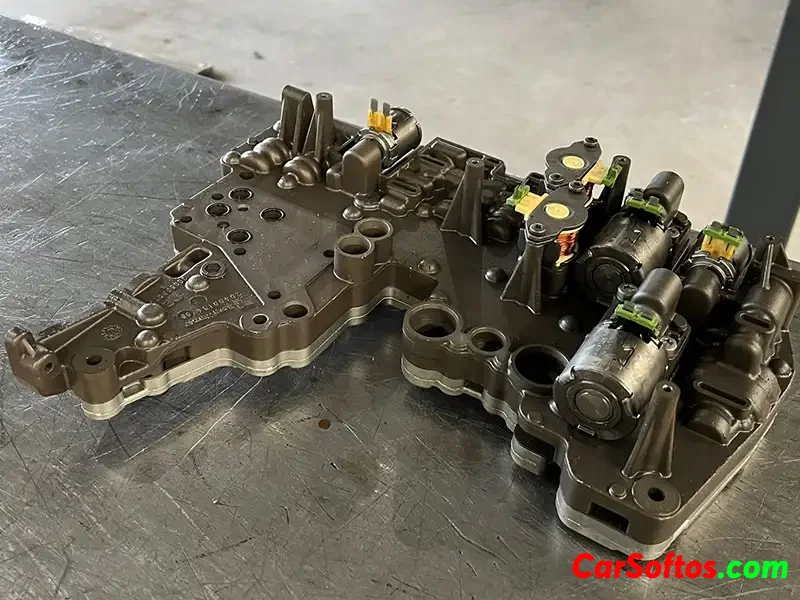
P179C is a manufacturer-specific transmission code, not a universal generic OBD-II engine code. In Audi documentation for the 0B5 / DL501 7-speed S tronic, it is described as “Main pressure valve, electric fault”, and Audi’s bulletin ties the matching case to symptom code 8029.
👉 In simple terms:
- the transmission control unit (TCU) sees an electrical fault
- in the main pressure valve control circuit
- inside the mechatronic / valve body system
This matters because the main pressure valve is one of the key parts controlling hydraulic pressure inside the dual-clutch gearbox. When it fails electrically, the gearbox can no longer manage clutch and shift pressure correctly. That is why P179C is commonly grouped with other 0B5 mechatronic faults like P174B, P174F, P1740, and P17D8 in Audi repair information.
⚠️ How Serious Is P179C?
Severity: ⭐⭐⭐⭐⭐ (High)
This is not a small code. Audi’s bulletin groups P179C with the 0B5 failure pattern that can trigger the warning “Gearbox malfunction: you can continue driving.” The car may still move, but the fault is serious enough to put the transmission into a protective strategy.
If the condition continues, you can get:
- ❌ harsh shifting
- ❌ delayed engagement
- ❌ reduced torque / reduced drivability
- ❌ additional mechatronic codes
- ❌ more expensive transmission repair later
That last point is an inference from Audi’s documented mechatronic repair path and the clustering of related electrical faults.
🚨 Common Symptoms of P179C
Typical symptoms can include:
- ⚠️ Gearbox malfunction warning on the dash
- ⚠️ rough or jerky shifts
- ⚠️ delayed drive or reverse engagement
- ⚠️ reduced power / torque limitation
- ⚠️ intermittent transmission warning that returns
- ⚠️ limp or protective mode behavior
- ⚠️ multiple DSG / S tronic codes stored together
Audi’s TSB groups P179C with related transmission electrical faults and gearbox warning behavior, while Ross-Tech forum cases show P179C appearing as a confirmed electrical malfunction in real 0B5 logs.
🧠 Most Common Causes of P179C
1️⃣ Mechatronic circuit board failure — most common
This is the biggest cause on the Audi 0B5 / DL501 path.
Audi’s technical bulletin explains that the mechatronic circuit board / printed circuit foil can develop poor internal contact areas, and that oil additives may contribute to delamination of the plastic circuit plates. In matching cases, Audi’s official repair path centers on replacing the circuit board, not randomly replacing outside components first.
2️⃣ Main pressure valve electrical fault
The code description itself points directly to the main pressure valve electrical circuit. That means the fault can involve:
- the valve control path
- the internal solenoid path
- the mechatronic electronics that drive it
Volkswagen/Audi-oriented code references also describe P179C as main pressure valve electric fault.
3️⃣ Broader 0B5 mechatronic fault cluster
P179C often does not appear alone. Audi groups it with nearby faults such as:
- P174B — Valve 4 in sub-gearbox 1, electrical fault
- P174F — Valve 4 in sub-gearbox 2, electrical fault
- P179D — Coolant oil valve electrical fault
- P1740 — Clutch temperature monitoring
- P17D8 — Torque limitation because of clutch temperature
That pattern strongly suggests that P179C is often part of a larger mechatronic electronics failure, not just a one-off glitch.
4️⃣ Internal connection / harness issues inside the mechatronic
While Audi’s strongest factory explanation points to internal board/contact failure, some repair-oriented references and forum cases also point toward internal electrical connection problems within the mechatronic assembly.
5️⃣ Secondary hydraulic consequences
Because this is the main pressure valve, a fault here can affect the gearbox more broadly than a smaller valve code. It may lead to:
- unstable line pressure
- poor clutch control
- erratic shifting
- engagement problems
This is a mechanical inference from the role of the main pressure valve plus the symptom pattern seen in 0B5 cases.
🏎️ Which Cars Commonly Show P179C?
The strongest source trail points mainly to Audi vehicles using the 0B5 / DL501 7-speed S tronic transmission, such as the S4, S5, Q5, and some A6/A7-family applications using that gearbox family.
🔧 Step-by-Step Diagnosis
1️⃣ Confirm the exact DTC and symptom code
This part is critical.
Audi explicitly says the fault code and symptom code must match exactly before the bulletin repair path should be followed. For P179C, the documented match is P179C with symptom code 8029.
2️⃣ Check for related transmission codes
Do not diagnose P179C by itself. Look for:
- P174B
- P174F
- P179D
- P1740
- P17D8
- P0726
If several are present together, that strongly supports the known 0B5 mechatronic circuit-board failure pattern.
3️⃣ Read transmission fault status and freeze-frame
Check whether the code is:
- intermittent
- confirmed
- frequency increasing
- appearing after warmup
- paired with gearbox warning messages
Real-world 0B5 cases on forums show P179C appearing as a confirmed electrical malfunction, so fault status matters.
4️⃣ Evaluate real gearbox behavior
Pay attention to:
- harsh shifts
- delayed takeoff
- weak engagement
- repeated warning after clearing
- worsening behavior when hot
These checks align with the typical 0B5 mechatronic complaint pattern described in factory and repair references.
5️⃣ Compare the case against the Audi TSB path
If the DTC and symptom code match the bulletin, Audi’s service route is centered on:
- removing the mechatronics unit
- replacing the circuit board / printed circuit foil
- reinstalling with the correct associated parts and fluid
That is the key point: the factory repair path is not “replace random external parts first.”
🛠️ How to Fix P179C
✔️ If the TSB match is exact: repair the mechatronic circuit board
For matching 0B5 cases, Audi’s documented fix focuses on:
- removing the mechatronics unit
- replacing the circuit board / printed circuit foil
- installing seals / related parts / fluid per the repair procedure
✔️ Do not assume it is only external wiring
The strongest Audi explanation points to internal contact loss and circuit board delamination. So clearing the code or looking only for external harness damage can miss the real cause.
✔️ Check the whole mechatronic cluster
If P179C appears with P174B, P174F, P179D, P1740, or P17D8, the right repair may need to address the broader mechatronic issue pattern, not only one fault line.
✔️ Replace the full mechatronic only when needed
Some repair references suggest many 0B5 faults can be solved with a circuit-board/mechatronic repair kit, while some cases require full mechatronic replacement. This is repair-market guidance rather than factory wording, but it matches the general repair direction seen in the official Audi material.
💰 Typical Repair Cost
Real cost varies a lot by labor rate, region, and whether you use a dealer or DSG specialist.
Practical estimate:
| Repair | Typical cost |
|---|---|
| Diagnosis / scan / confirmation | $80–$180 |
| Fluid / service items | $150–$400 |
| Mechatronic labor | $400–$1,000+ |
| Circuit board / repair parts / seals / fluid | often pushes total to $1,000–$1,800+ |
| Full mechatronic replacement | $1,500–$3,000+ |
These are market-style estimates, not factory flat-rate pricing. The load-bearing fact is that Audi’s documented repair involves mechatronic removal plus circuit-board replacement parts and fluid, so P179C is usually not cheap.
❗ Common Mistakes
❌ Clearing the fault and continuing to drive
Because P179C belongs to a known 0B5 mechatronic failure pattern, repeated resets can delay the real fix while the gearbox keeps deteriorating.
❌ Ignoring the symptom code
Audi specifically says the TSB should only be used when the DTC and symptom code match exactly. For P179C, that means 8029 matters.
❌ Treating P179C like a generic engine code
This is a manufacturer-specific transmission fault, strongly tied in the source trail above to the Audi 0B5 / DL501 S tronic mechatronic system.
❌ Replacing the clutch first
P179C may coexist with clutch-related symptoms, but the strongest factory evidence points first toward the mechatronic electronics / pressure valve control path.
⚖️ P179C vs Related Codes
P179C
Main pressure valve, electric fault — commonly with symptom code 8029.
P179D
Coolant oil valve electrical fault — nearby fault in the same mechatronic cluster.
P174B
Valve 4 in sub-gearbox 1, electrical fault — another 0B5 solenoid/control-side fault.
P174F
Valve 4 in sub-gearbox 2, electrical fault — matching sister fault on the other half.
P1740
Clutch temperature monitoring — part of the same 0B5 issue family.
P17D8
Torque limitation because of clutch temperature — often appears in the same warning pattern.
👉 Simple explanation:
- P179C = main pressure valve electrical fault
- P179D = coolant oil valve fault
- P174B / P174F = valve 4 electrical faults
- P1740 / P17D8 = clutch-temperature-related logic nearby
🚗 Can You Drive With P179C?
Sometimes, briefly — but it is risky.
The gearbox may still move, and the dashboard may even say you can continue driving, but that does not mean the problem is harmless. If shifts are getting rough or the warning keeps returning, it should be diagnosed quickly.
📌 Final Verdict
P179C is a serious Audi S tronic / DSG transmission fault that usually points to an electrical problem in the main pressure valve control path, most often inside the 0B5 mechatronic circuit-board failure pattern. The strongest factory-backed repair path centers on mechatronics removal and circuit-board / printed circuit foil replacement, not random guesswork.

Tags:
Users of Guests are not allowed to comment this publication.