
Navigation
Top News
Statistics
Advertisement
Аrchives
Votes
| Rate the site |
P2262 Trouble Code — Low or No Boost? Causes, Symptoms and Repair Cost
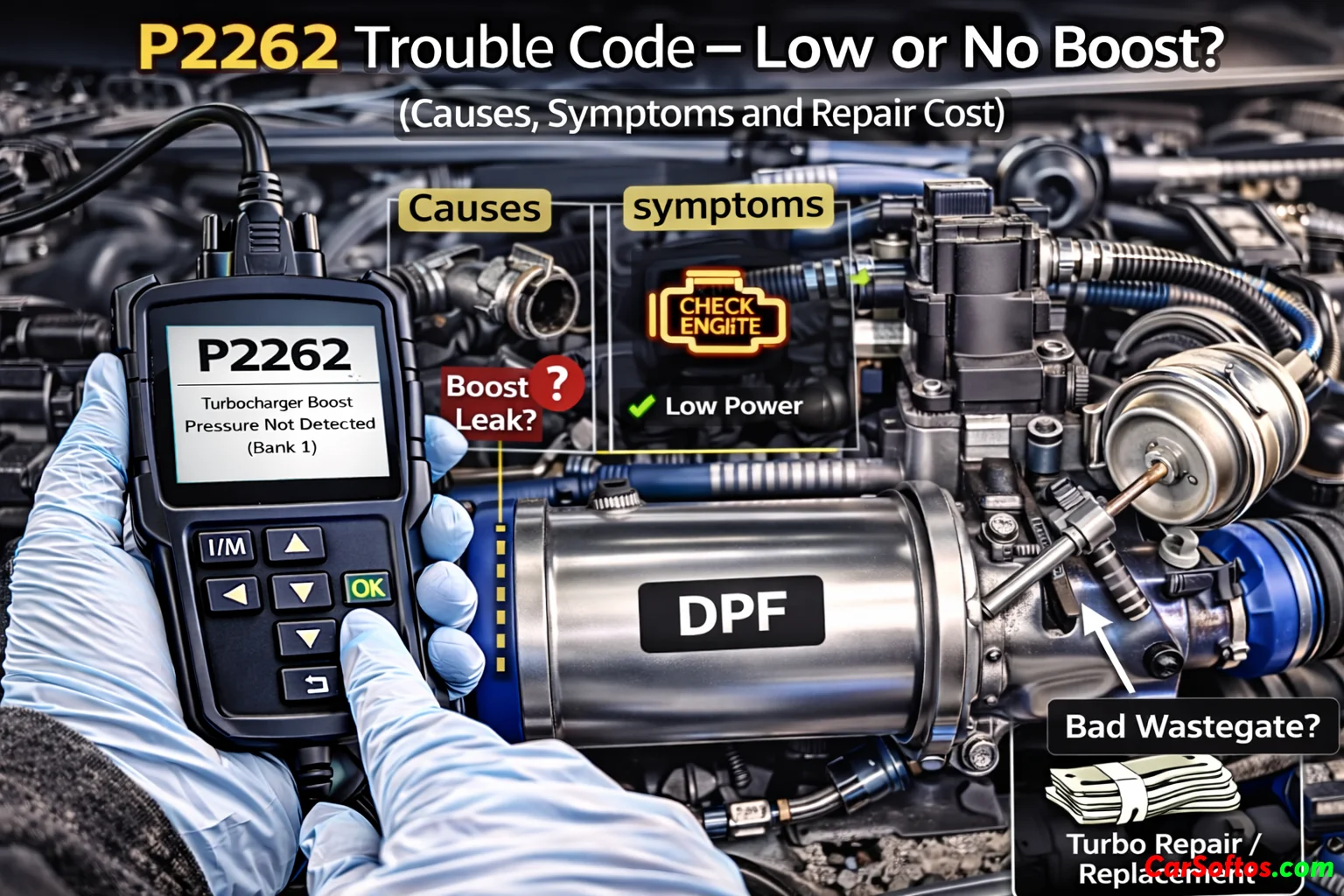
🔍 What P2262 means
P2262 is the generic OBD-II fault for “Turbocharger/Supercharger Boost Pressure Not Detected – Mechanical.” In plain English, the ECU expected to see boost rise under load, but sensor feedback showed that boost did not build as expected. Ford’s OBD code list uses the same basic definition, and multiple repair references describe it as a low-or-missing boost condition rather than a simple electrical fault.
That is why P2262 often gets mixed up with P0299. In the real world they can overlap, but P2262 is commonly used when the control system believes the turbo mechanically failed to produce the expected boost, which points you toward leaks, a stuck wastegate/VGT mechanism, actuator problems, charge-air leaks, or internal turbo damage.
⚠️ Why this code matters
This is not a code to ignore. When the engine cannot build normal boost, you usually get major power loss, poor acceleration, higher fuel use, and sometimes limp mode. If the root cause is a sticking turbo, failing actuator, or severe leak, continued driving can turn a smaller repair into a much more expensive turbo replacement.
🚨 Common symptoms of P2262
Typical symptoms include:
- Noticeable loss of power
- Weak acceleration, especially uphill
- Little or no turbo boost
- Limp mode
- Check Engine Light
- Sometimes smoke, hissing, or abnormal turbo response
- In some vehicles, boost may come in late or feel inconsistent rather than being completely gone
🧠 How the turbo system causes P2262
A turbo system needs three things to make boost properly:
- Exhaust energy to spin the turbine
- Correct control of the wastegate or VGT vanes
- A sealed charge-air path from turbo to intercooler to intake manifold
If any of those fail, the ECU can command boost but never see the expected pressure rise at the MAP/boost sensor, and P2262 is set. Wastegate function references explain that if exhaust is diverted away from the turbine too early, boost drops; boost-leak guides show that cracked hoses or intercooler leaks can let pressurized air escape before it reaches the engine.
Most common causes of P2262
1) Boost leak in a hose, charge pipe, intercooler, or clamp
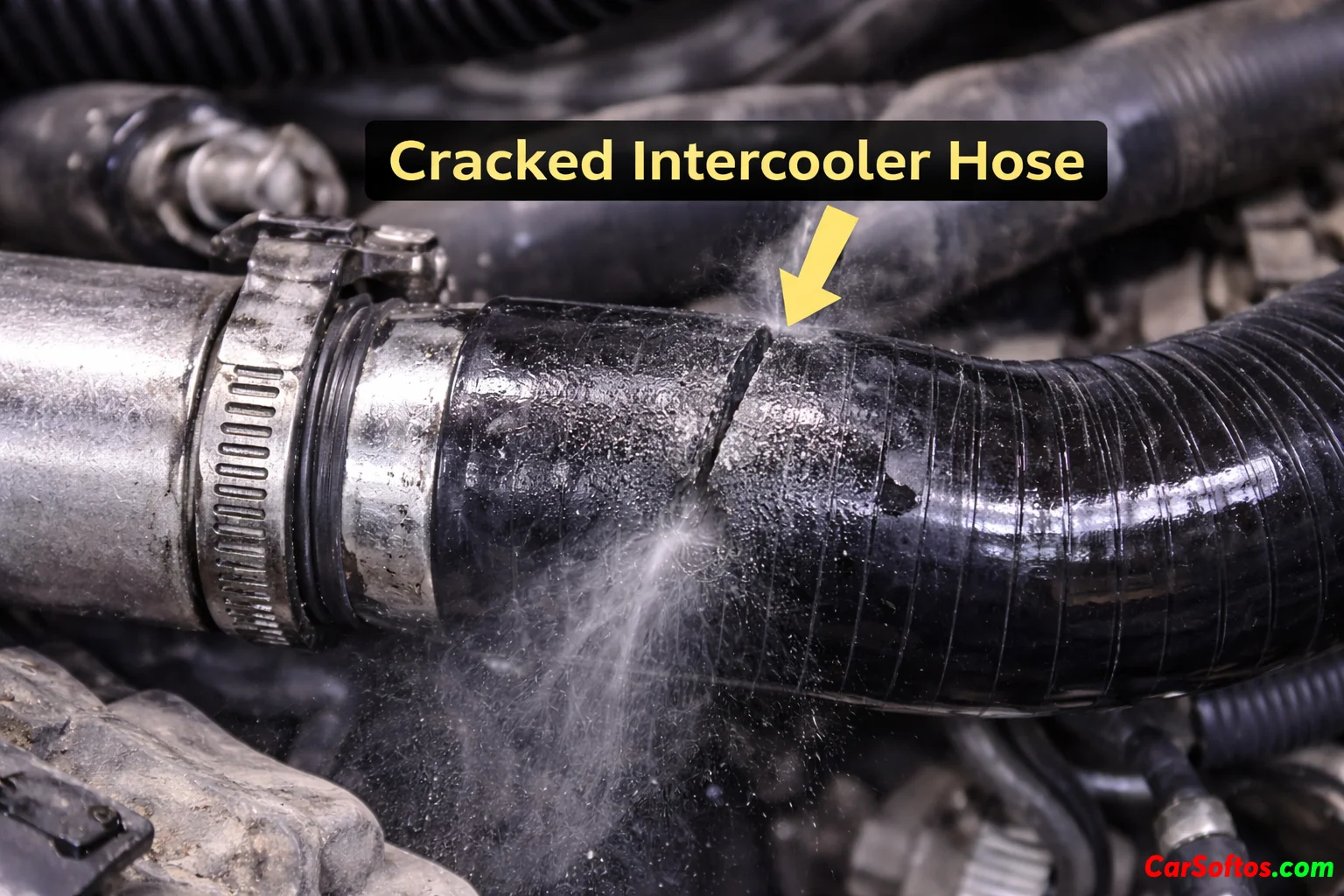
This is one of the first things to check. A split hose, cracked pipe, loose clamp, or leaking intercooler can dump boost pressure before it reaches the intake. That gives you classic underboost behavior even when the turbo itself is still okay.
2) Wastegate or VGT actuator problem
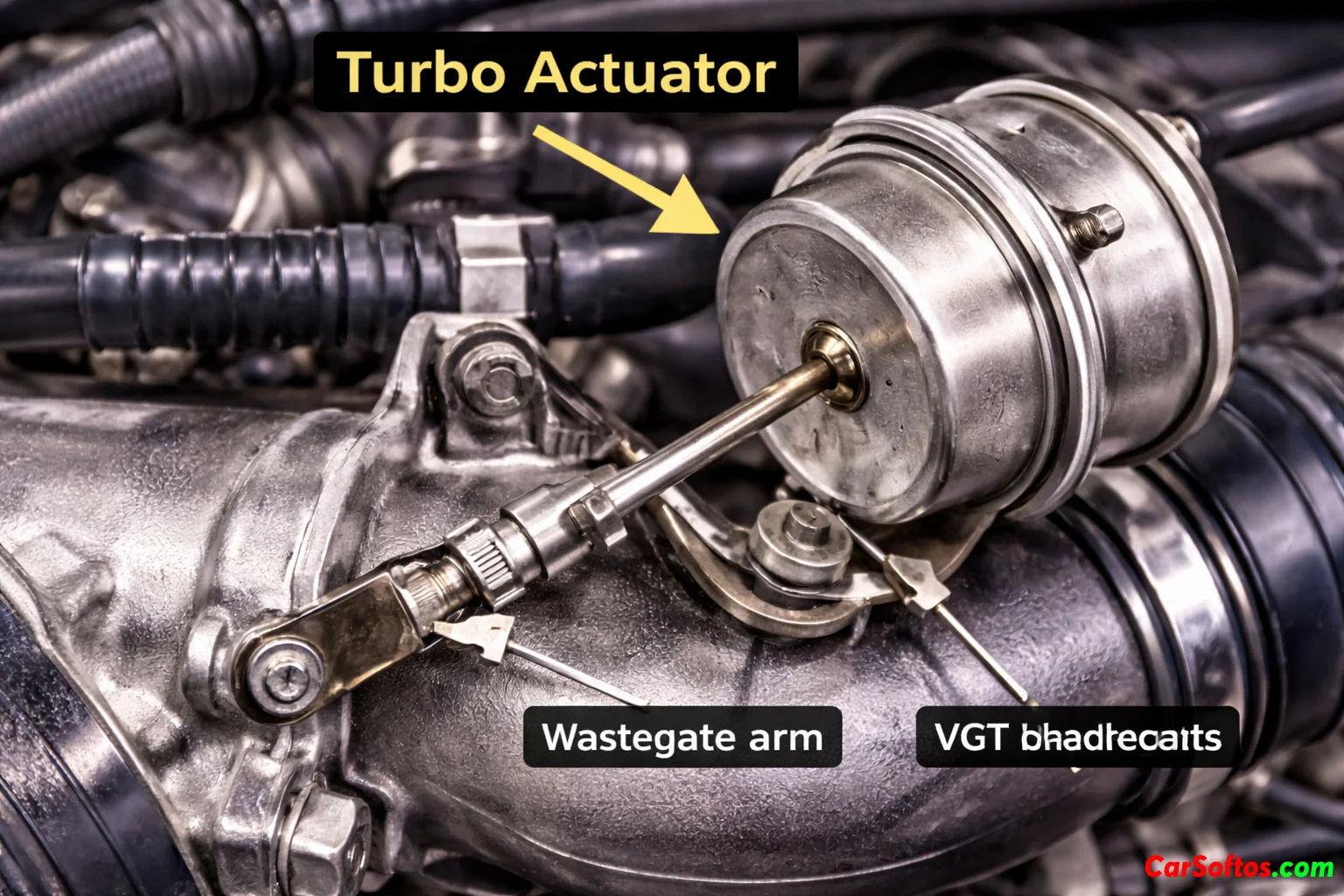
If the wastegate sticks open, or the variable-geometry vanes fail to close correctly, exhaust energy is not used properly and the turbo never builds normal pressure. On many diesel platforms, actuator faults are a very common reason for low boost and P2262-style complaints.
3) Turbocharger mechanical failure
Worn bearings, damaged compressor or turbine wheels, excessive shaft play, sticking vanes, or carbon buildup can all limit turbo speed and reduce boost. This is the expensive cause people fear, but it should be confirmed only after leak and actuator checks.
4) Faulty boost / MAP sensor or wiring
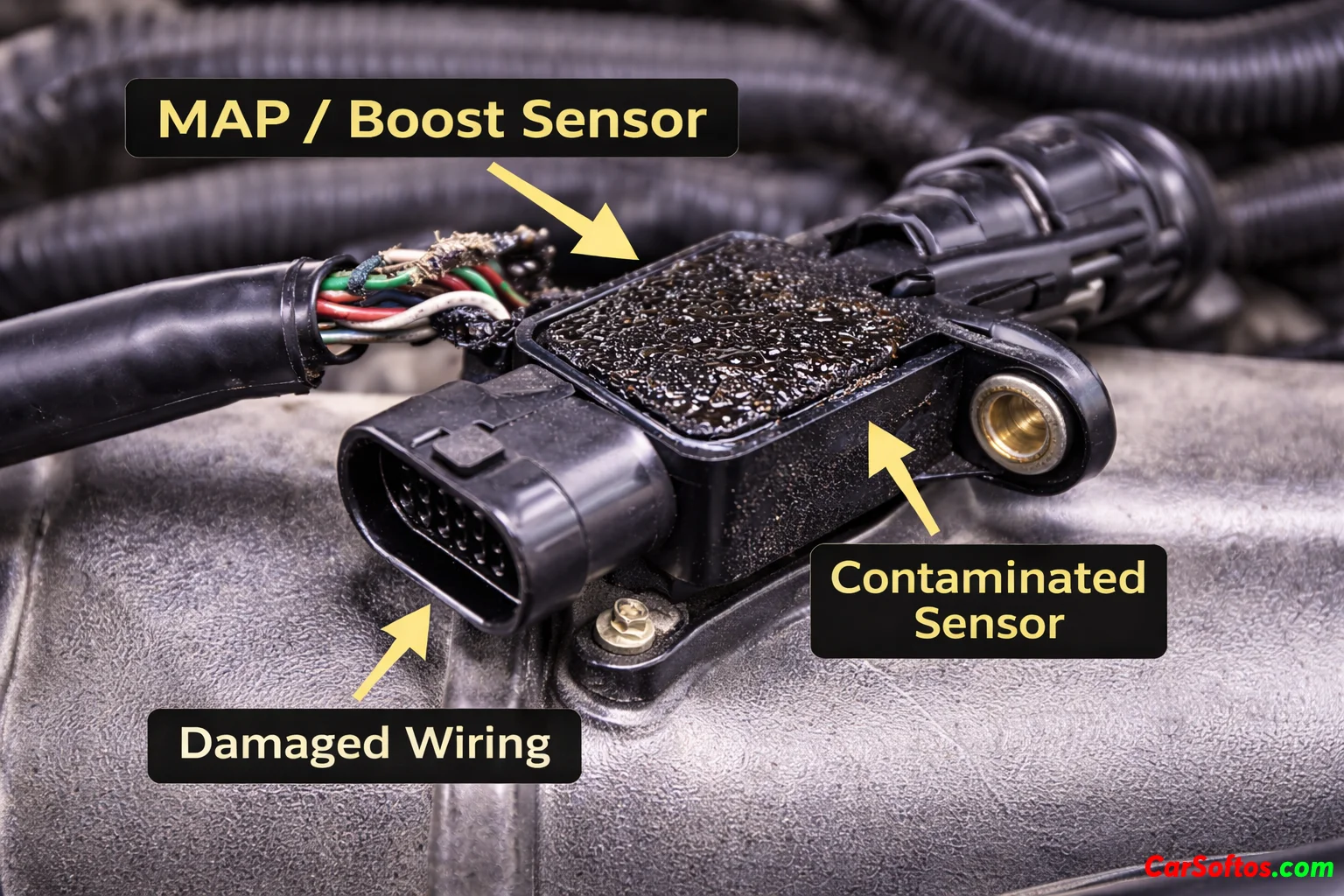
If the sensor cannot read pressure correctly, the ECU may believe boost is missing even when hardware is partly working. Several repair references include damaged boost-pressure sensor circuits, MAP faults, or wiring/connector issues in the P2262 cause list.
5) Vacuum or control line problems
On vacuum-controlled turbo systems, cracked vacuum hoses, sticky control solenoids, or routing problems can prevent the wastegate or actuator from moving as commanded.
6) Intake or exhaust-side restriction / related system fault
In some cases, related faults in the EGR system, intake path, or engine condition can contribute to poor boost development. Manufacturer-specific versions of P2262 can also vary, which is why exact diagnosis should always follow the vehicle’s service information.
🔥How serious is P2262?
Severity: high
You can sometimes still drive the car, but performance is often heavily reduced, and hard driving can worsen the situation. A severe leak or turbo control fault can also raise exhaust temperature and stress the turbo. If the vehicle is in limp mode or barely accelerates, repair should be treated as urgent.
Can you drive with P2262?
Only short-term and only if the car still drives safely. If power is badly reduced, there is heavy smoke, loud hissing, unusual turbo noise, or the vehicle enters limp mode, it should not be driven far. Driving a turbo engine with a known boost problem for too long can turn a hose, actuator, or sensor problem into a full turbo failure.
🔧 Step-by-step diagnosis for P2262
1) Scan all codes and freeze-frame data
Check whether P2262 appears alone or with related codes such as:
- P0299 underboost
- actuator / vane position codes
- boost sensor or MAP sensor codes
- air leak related codes
Freeze-frame data matters because it tells you whether the fault happened under load, during acceleration, or at a specific RPM range.
2) Compare commanded boost vs actual boost
On live data, look at:
- Boost pressure / MAP
- Desired boost
- Actual boost
- Turbo actuator position if available
If desired boost rises but actual boost stays low, you know the engine is asking for boost and not getting it. That immediately narrows the fault toward leaks, actuator problems, or the turbo itself.
3) Inspect every boost hose and charge-air connection
Look for:
- split rubber hoses
- oily residue around a leak point
- pipes that popped loose
- cracked intercooler end tanks
- loose clamps
Oil mist around a joint is a major clue, because small amounts of oil vapor often travel through turbo plumbing and collect where boost is escaping. Leak-testing guides specifically recommend pressure testing the charge system instead of relying only on visual inspection.
4) Check wastegate or VGT actuator operation
Verify that the actuator moves through its range and actually changes turbo control. On platforms with bi-directional scan support, commanding the actuator is one of the fastest ways to catch a stuck or failing unit.
5) Inspect the boost sensor / MAP sensor and connector
Check for:
- damaged wiring
- bent pins
- oil contamination
- unrealistic readings with key-on / engine-off
- sensor values that do not change logically under load
A bad sensor can send you in circles if you replace hoses or even the turbo before verifying data.
6) Inspect the turbo mechanically
If hoses and controls check out, inspect the turbo for:
- excessive shaft play
- damaged compressor blades
- seized or dragging turbine
- stuck vanes
- obvious oil leakage
This is the point where “bad turbo” becomes a justified diagnosis rather than a guess.
Best repair order for P2262
A smart repair sequence usually looks like this:
First
- inspect hoses, clamps, intercooler pipes
- check live boost data
- check boost/MAP sensor and wiring
Then
- test wastegate / VGT actuator
- verify vacuum or control solenoid operation
Last
- condemn the turbocharger only after the rest is proven good
That order matters because many P2262 cases are caused by much cheaper faults than a failed turbo. Recent repair guidance on actuator systems also emphasizes that the actuator and turbocharger are separate failure points and should not be lumped together automatically.
Typical fixes
Depending on the root cause, common repairs include:
- replacing a split boost hose or loose clamp
- repairing a charge pipe or intercooler leak
- replacing a bad MAP / boost sensor
- repairing damaged wiring or connectors
- fixing a vacuum line or control solenoid
- replacing a failed turbo actuator
- cleaning or replacing a sticking / worn turbocharger
💰 Repair cost
Costs vary a lot by platform, but the pattern is clear:
- simple boost-leak or clamp repair can be relatively inexpensive
- actuator repairs usually cost far less than a complete turbo
- full turbo replacement is the expensive end of the scale
Recent cost references put many P2262 repairs broadly in the $150–$600 range when the problem is not the turbo itself, while actuator replacement can reach $200–$1,100 depending on the platform. Full turbo replacement can run roughly $2,500–$4,000+ on some vehicles.
A practical article-friendly breakdown:
| Repair | Typical cost |
|---|---|
| Hose / clamp / small boost leak | $20–$150 |
| Boost or MAP sensor | $60–$250 |
| Vacuum / control line repair | $50–$200 |
| Actuator repair / replacement | $200–$1,100 |
| Turbocharger replacement | $2,500–$4,000+ |
These numbers are best used as broad guidance, because labor and part pricing vary a lot by engine and region.
🧠 Common mistakes people make
Replacing the turbo too early
This is the biggest one. A bad hose, leaking intercooler pipe, faulty sensor, or actuator issue can mimic a dead turbo.
Looking only for visible leaks
Small boost leaks may not be obvious until the system is pressure-tested.
Ignoring the actuator
On modern diesels and many gasoline turbo engines, the actuator is a frequent failure point and may be serviceable separately from the turbo.
Guessing instead of reading live data
Desired vs actual boost is one of the fastest ways to avoid wasted money.
⚖️ P2262 vs similar turbo codes
P2262
Boost pressure not detected — usually points to a real-world failure to build boost, often mechanical or pneumatic in nature.
P0299
Underboost condition — very closely related and often appears from the same root causes.
Actuator / vane position codes
Codes such as actuator position or relearn faults often indicate the control side of the turbo rather than the charge-air plumbing.
📊 Final verdict
P2262 usually means the engine asked for boost and did not get it. The most common real causes are a boost leak, wastegate/VGT actuator problem, faulty sensor/wiring, or a mechanically worn turbo. The smartest path is to diagnose in that order, because many P2262 repairs are much cheaper than a full turbo replacement.

Tags:
Users of Guests are not allowed to comment this publication.