
Navigation
Top News
Statistics
Advertisement
Аrchives
Votes
| Rate the site |
BMW Code 2F4A — Interface EWS-DME: Causes, Symptoms and Fix
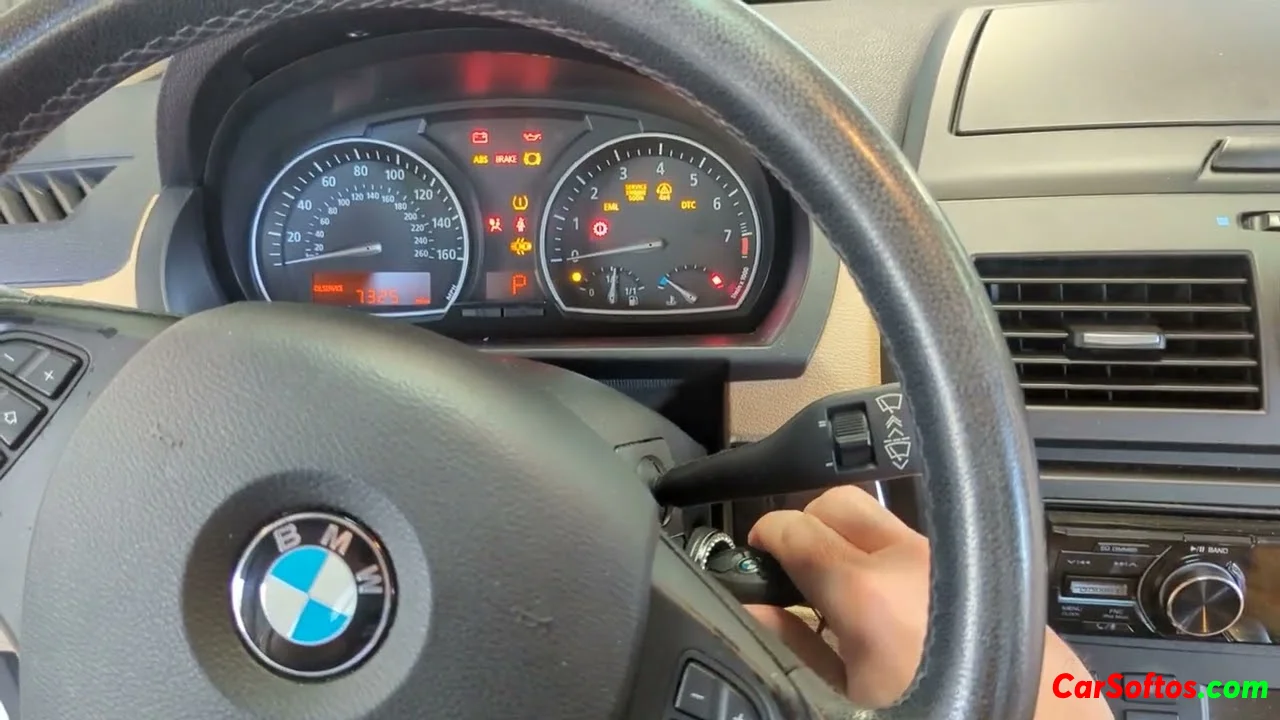
BMW fault code 2F4A usually points to an EWS/CAS-to-DME interface problem. In practical terms, the engine computer and the immobilizer/start authorization system are not communicating correctly or are not agreeing on authorization data. BMW code lists commonly describe 2F4A as “Interface EWS-DME electronic vehicle immobilization / digital motor electronics.”
On older BMWs this is often discussed as an EWS-DME issue, while many newer BMWs use CAS as the start authorization module. In real-world diagnostics, owners and technicians still often refer to the family of faults as EWS/CAS–DME synchronization or interface faults, especially in crank-no-start cases.
This is why 2F4A can be much more serious than a simple sensor code. In some cars it appears only as a stored intermittent fault. In others, it can cause:
-
crank but no start
-
no crank
-
intermittent starting
-
immobilizer-related starting authorization issues
-
multiple communication faults across CAS/DME systems
🔎 What Does BMW Code 2F4A Mean?
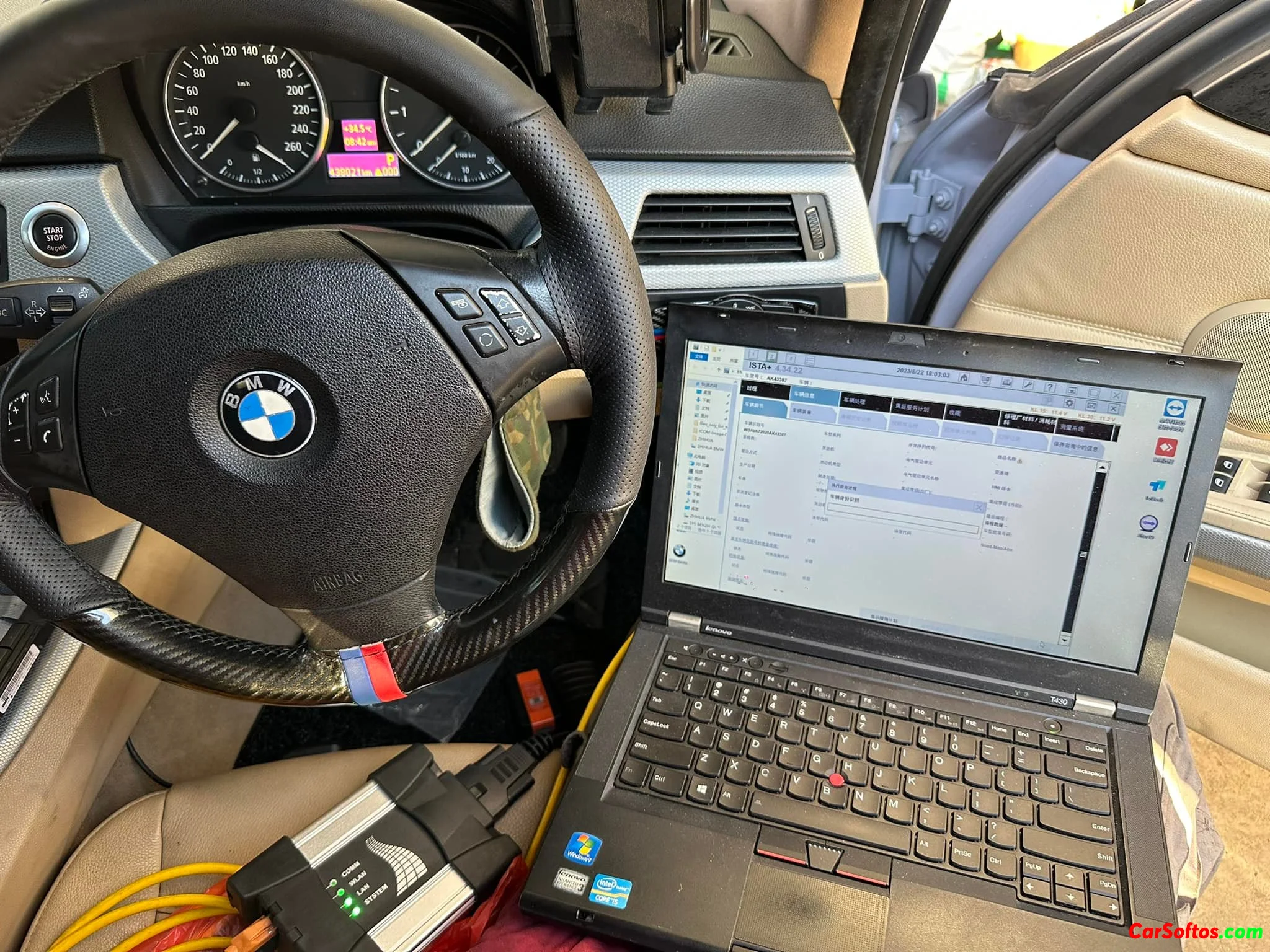
BMW’s own code descriptions as reproduced in enthusiast code lists identify 2F4A as an interface fault between EWS and DME. In plain English, the car is reporting that the anti-theft/start authorization side and the engine computer side are not exchanging valid information the way they should.
That matters because a BMW does not simply start when you turn the key or press the button. The car first checks whether the key, CAS/EWS, and DME all agree that starting is allowed. If that chain breaks, the car may refuse to crank or may crank without firing. Forum diagnostics around 2F4A repeatedly connect the code with start authorization mismatch, CAS/DME communication issues, or ISN-related mismatch after module replacement/cloning.
🚗 What Systems Are Involved?
To understand 2F4A, it helps to know the start-authorization chain:
-
Key / transponder
-
EWS or CAS module
-
DME (engine computer)
-
starter authorization logic
-
sometimes related junction box / power supply / relay path depending on platform and symptom pattern
If one part of that chain loses power, loses communication, becomes corrupted, or no longer matches coded data, BMW may store 2F4A and the vehicle may not start normally.
⚠️ Common Symptoms of BMW 2F4A
The symptom pattern varies a lot depending on the exact failure. Common owner reports include:
-
crank but no start
-
no crank
-
intermittent no-start
-
car starts sometimes, then refuses later
-
dashboard powers up, but engine will not fire
-
companion CAS/DME faults such as 2F4C or A103
-
in some cases, a cluster of electrical or voltage-related issues appearing at the same time
A key detail here is that 2F4A by itself is not enough to condemn the DME. In many real cases, the DME is still reachable by diagnostics, and the underlying issue is instead authorization mismatch, module coding, low voltage, relay/power supply, or CAS-side trouble.
🔧 Most Common Causes of 2F4A
1) CAS/EWS and DME authorization mismatch
This is the classic cause. If the ISN / start authorization data between the immobilizer side and DME side does not match, the car may store 2F4A and refuse to start. This is especially relevant after:
-
used module installation
-
DME cloning mistakes
-
CAS replacement
-
key programming issues
-
flash/coding errors
2) Low battery voltage or unstable voltage
BMWs are notoriously sensitive to low system voltage. Owners and technicians often see multiple implausible or communication-related faults after dead batteries, weak batteries, charging issues, or incorrect power events. E90/E92 troubleshooting threads also connect DME-side starting faults with power-supply issues rather than immediate DME failure.
3) DME power supply / relay / fuse problems
If the DME is not being powered correctly, the car can behave like an immobilizer or module fault even when the real issue is in the power delivery path. On BMW forums, no-start investigations with DME-related faults often end up at relays, fuses, junction-box supply, or DME relay circuits.
4) CAS module faults or comfort access related issues
Some BMW-specific diagnostic threads point out that 2F4A together with certain CAS/comfort access faults can produce a classic no-start situation. One E90/E92 discussion explicitly calls 2F4A plus A103/A114 a common no-start pattern linked to comfort access door-sensor failure or related CAS-side problems.
5) Wiring, grounds, connectors, or water intrusion
Intermittent communication and authorization faults can also come from:
-
poor grounds
-
corroded connectors
-
damaged harnesses
-
water intrusion around module areas
-
disturbed wiring after repair or accident work
6) DME hardware or software corruption
This is possible, but it should be treated as a later conclusion, not the first one. BMW discussions around cloned/replaced modules show 2F4A can appear when module data or adaptation/coding is wrong, even if the hardware itself is not completely dead.
🧠 Why 2F4A Is Commonly Misdiagnosed
A lot of owners see the word DME and immediately assume “bad ECU.” That is often too fast.
With 2F4A, the more accurate question is:
Is the DME truly internally failed, or is the start authorization path between CAS/EWS and DME broken?
That difference matters because the repair path can be completely different:
-
battery / voltage fix
-
relay or fuse repair
-
CAS/DME alignment or coding correction
-
key / transponder diagnosis
-
wiring or grounding repair
-
only then, if proven, DME repair or replacement
This is one of those BMW faults where blind parts replacement gets expensive very quickly.
🔍 2F4A vs Real “DME Internal Error”
2F4A is usually listed as an interface/immobilizer communication fault, not the same kind of code family as direct DME internal checksum or memory faults. BMW code lists show 2F4A specifically as Interface EWS-DME, while other neighboring faults in BMW lists are labeled much more explicitly as internal failures.
So if a scan tool labels 2F4A as something like “DME internal error,” that wording is likely oversimplified or misleading.
🚨 Can BMW 2F4A Leave You Stranded?
Yes.
If the authorization chain fails completely, the car may:
-
not crank at all
-
crank and never fire
-
start randomly only some of the time
-
strand you after a battery event, module swap, or electrical fault
This is not a “drive it for months and ignore it” type of code when active symptoms are present.
🔎 How Mechanics Diagnose 2F4A Properly
A proper diagnosis should be methodical.
Step 1: Scan both DME and CAS/EWS
Do not read only engine faults. 2F4A is often only half the story. Look for matching CAS-side codes such as A103, A114, 2F4C, or start authorization faults.
Step 2: Check battery voltage and charging condition
Low voltage can cause nonsense communication faults. Confirm battery state, terminal condition, and charging health before condemning modules. BMW no-start threads often show widespread fault cascades after voltage issues.
Step 3: Confirm DME power supply
Verify the DME is getting proper power and ground. On some BMW no-start cases, relay/fuse/junction-box problems mimic much bigger module failures.
Step 4: Inspect key / CAS / start authorization path
Check whether the key is recognized and whether the module chain is granting start permission. Forum diagnosis around 2F4A repeatedly centers on this stage.
Step 5: Check for prior module replacement or coding history
If the car has had a used DME, CAS, or cloned module installed, 2F4A becomes much more suspicious for coding/ISN mismatch rather than simple hardware failure.
Step 6: Only then consider DME repair/replacement
A failed DME is possible, but it should be the conclusion after voltage, power supply, authorization path, and coding mismatch have been ruled out.
🛠️ What Actually Fixes 2F4A?
The correct fix depends on the root cause. Common real-world solutions include:
-
battery replacement or voltage correction
-
DME relay / fuse / power-supply repair
-
CAS/EWS–DME alignment or coding correction
-
correcting a cloned/replacement module mismatch
-
repairing wiring, grounds, or water-damaged connectors
-
key or CAS diagnosis
-
in proven cases, DME repair or replacement
💰 Typical Repair Cost Range
Because 2F4A is a system-level authorization/communication fault, repair cost varies massively:
-
battery / terminals / basic electrical fix: relatively cheap
-
relay, fuse, wiring, ground repair: low to moderate
-
CAS/DME coding or alignment work: moderate
-
key / CAS module issues: moderate to expensive
-
DME repair or replacement / cloning: expensive
That broad range is exactly why this code deserves proper diagnosis first.
🏁 Final Verdict
BMW code 2F4A is usually an EWS/CAS–DME interface fault, not a simple “bad ECU” verdict. BMW code lists consistently describe it as an Interface EWS-DME fault, and real-world BMW diagnostics connect it mainly with start authorization mismatch, CAS/DME communication issues, voltage problems, and no-start conditions.
That means the smartest takeaway for the reader is:
Do not replace the DME just because you saw 2F4A. First verify voltage, DME power supply, CAS/EWS communication, and module matching.

Tags:
Users of Guests are not allowed to comment this publication.