
Navigation
Top News
Statistics
Advertisement
Аrchives
Votes
| Rate the site |
MAF Sensor Problems: When a Bad (or Dirty) MAF Triggers the Check Engine Light — And How to Confirm It Fast
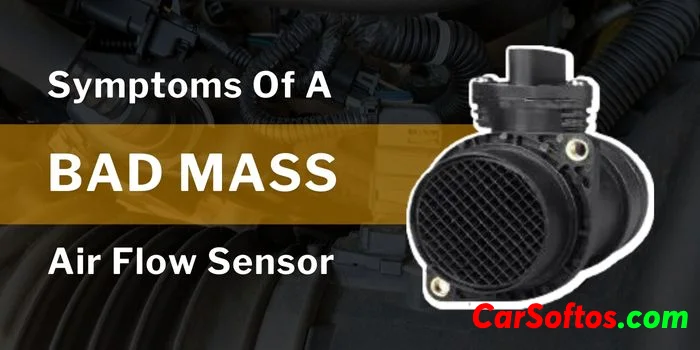
The Mass Air Flow (MAF) sensor measures how much air enters the engine.
Your ECU uses this airflow number to calculate:
-
how much fuel to inject
-
ignition timing adjustments
-
idle stability
-
emissions control strategy
When the MAF reading is wrong (dirty sensor, air leaks, wiring issues), the ECU “guesses” fuel delivery — and that’s when you get rough idle, hesitation, poor MPG, and the Check Engine Light.
The Most Common MAF-Related Codes (What They Usually Mean)
MAF issues don’t always show the same code. These are the usual suspects:
-
P0101 — MAF performance / range problem (most common)
-
P0102 — MAF circuit low input (often wiring/sensor power issue)
-
P0103 — MAF circuit high input (signal issue, wiring, sometimes contamination)
-
P0171 / P0174 — System too lean (often unmetered air / vacuum leak, but MAF can be cause)
-
P0172 / P0175 — System too rich (MAF reading too high or other fuel control issue)
-
P0300 series — Misfires (can be secondary effect of wrong fueling)
✅ Important: MAF is often the trigger, but not always the broken part. Google loves that nuance.
“Bad MAF” vs “Dirty MAF” vs “Not the MAF at All”
1) Dirty MAF (Very common)
Oil vapor + dust coats the sensing element → airflow reading drifts.
Typical story:
-
car runs “mostly fine”
-
MPG gets worse
-
idle feels off
-
code appears intermittently
2) Failing MAF (electronics aging)
Intermittent signal dropouts or slow response.
Typical story:
-
sometimes perfect, sometimes terrible
-
sudden hesitation
-
light comes and goes
3) Not the MAF (the classic trap)
The ECU sees airflow mismatch, but the real cause is:
-
intake boot crack after the MAF
-
vacuum leak
-
PCV leak
-
stuck purge valve (EVAP)
-
exhaust leak before upstream O2
-
low fuel pressure (fuel pump/filter)
Symptoms That Strongly Point to a MAF Issue
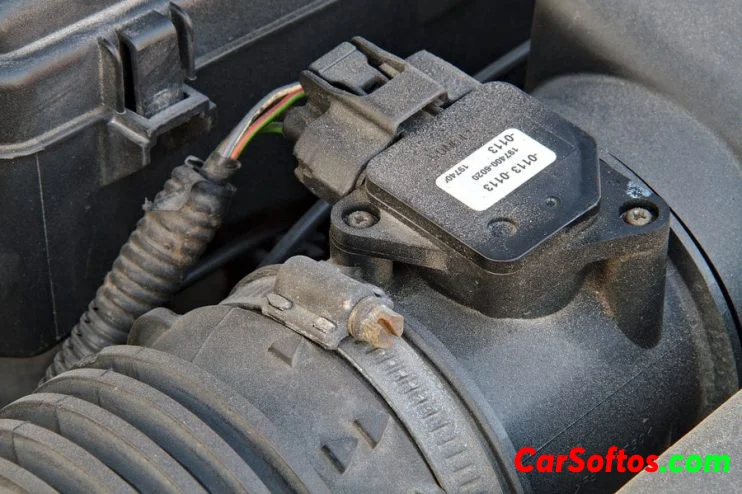
-
rough idle that improves slightly when revved
-
hesitation on light throttle
-
poor MPG without obvious reason
-
sluggish acceleration, especially low RPM
-
black smoke (rare, usually rich condition)
-
stalling when coming to a stop (some cars)
The “Fast Confirm” Checklist Mechanics Use (No Guessing)
Step 1: Look for unmetered air (intake leaks)
Before blaming the sensor, inspect:
-
intake tube between MAF and throttle body
-
clamps and couplers
-
PCV hoses
-
vacuum lines
A crack AFTER the MAF lets extra air in that the MAF never measured → lean codes.
Step 2: Check live data
Open your scanner and read:
A) MAF airflow at idle (g/s)
A rough rule many techs use:
-
~2–7 g/s at warm idle (varies by engine size)
Bigger engines read higher, small engines lower.
B) MAF airflow at 2500 RPM (no load)
Should rise smoothly and stay stable.
If it jumps, drops, or freezes → suspect MAF or wiring.
C) Fuel trims (STFT / LTFT)
-
Normal: usually around -10% to +10% (varies)
If you see: -
High positive trims (+15% to +30%) → running lean (often air leak/MAF under-reading)
-
High negative trims (-15% to -30%) → running rich (MAF over-reading, leaking injector, etc.)
Step 3: Quick sanity test (only as a clue)
On some cars, unplugging the MAF makes ECU use a default value (“speed-density backup”).
If the engine runs noticeably better unplugged, MAF is suspicious.
⚠ Not universal: some cars run worse unplugged even if MAF is bad.
Step 4: Electrical basics (5 minutes that saves money)
Check:
-
connector seated and not corroded
-
broken wires near the plug
-
air filter not collapsed or over-oiled (oiled filters can contaminate MAF)
How to Clean a MAF the Right Way (and not ruin it)

✅ Use MAF Sensor Cleaner only.
❌ Don’t use brake cleaner/carb cleaner.
❌ Don’t touch the sensing wire/film with fingers or brush.
Basic process:
-
Engine off, key out
-
Unplug connector
-
Remove MAF carefully
-
Spray the element thoroughly
-
Let it air dry completely (10–15 min)
-
Reinstall, clear code, test drive
If trims normalize and code stays away → you found it.
When Replacement Makes Sense
Replace the MAF if:
-
cleaning didn’t change trims/behavior
-
signal drops out intermittently
-
P0102/P0103 keeps returning with good wiring
-
live data is clearly irrational (flatline, spikes)
Cost ranges (typical):
-
cleaning: $10–20
-
replacement part: $80–300+ (OEM often higher)
-
shop labor: $50–150
Mistakes That Waste Money
-
Replacing O2 sensors for lean codes without checking intake leaks
-
Replacing MAF without checking the intake boot/PCV
-
Clearing codes repeatedly without reading fuel trims
-
Ignoring misfires (P0300) that can damage the catalytic converter
Safety: Can You Drive With a MAF Code?
Usually yes for short trips if:
-
light is solid
-
no severe power loss
-
no flashing CEL
Do not keep driving if:
-
CEL flashes
-
engine shakes badly
-
stalls in traffic
-
strong fuel smell/black smoke
Quick FAQ
Can a dirty MAF cause P0171?
Yes — if it under-reads airflow, ECU may run lean.
Can a MAF cause misfires?
Yes — wrong fueling can create misfires under load.
Will the light turn off after cleaning?
Often after clearing codes + several drive cycles if the issue is solved.
Final Take
A MAF sensor issue is one of the most common and most fixable reasons for a Check Engine Light — but the key is confirming it with intake inspection + fuel trims + airflow live data, not guessing.

Tags:
Users of Guests are not allowed to comment this publication.