
Navigation
Top News
Statistics
Advertisement
Аrchives
Votes
| Rate the site |
BMW Code 2A2C — Full Diagnosis Guide for Mixture Control Faults
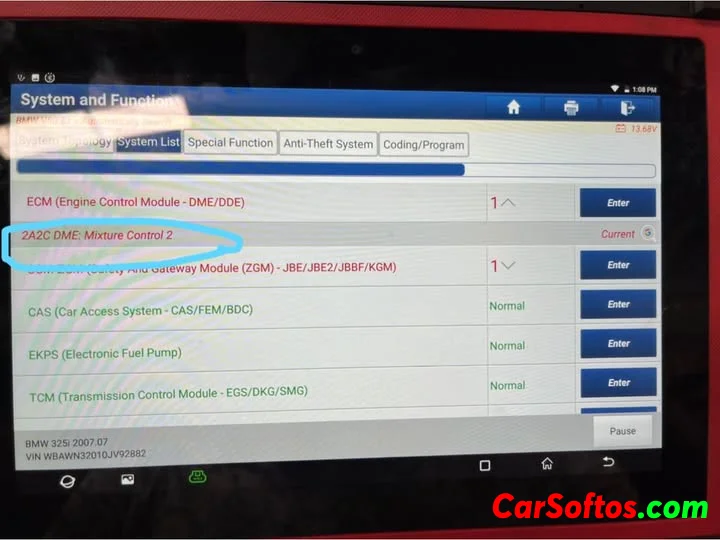
The BMW 2A2C code is a mixture-control fault for bank 2. In BMW-specific fault lists and forum diagnostics, 2A2C is repeatedly associated with fuel mixture control on bank 2, and depending on DME variant and companion codes it can point to a condition that is effectively too lean or too rich rather than naming one failed part by itself.
That is why 2A2C is best treated as a result code, not a parts code. It tells you the DME is unhappy with the air-fuel balance on bank 2, but the real cause can be an air leak, pre-cat oxygen sensor issue, injector problem, fuel-pressure problem, or wiring/connector issue. BMW-focused diagnostics also show 2A2C often appearing with other bank-2 lambda and misfire faults, which is a strong clue that the problem needs to be diagnosed as a system.
🔎 What Does 2A2C Mean on BMW?
On BMW engines, bank 2 refers to the second cylinder bank on V engines, or to the bank-2 control path where applicable in BMW fault logic; in practical diagnostics, the code is read as a bank-2 mixture regulation fault. BMW forum references and fault lookups show 2A2C as “fuel mixture control 2”, and experienced BMW diagnostics posters note that the exact lean/rich interpretation is often clarified by the matching generic P-code, live fuel trims, and any related O2-sensor faults.
The key point for the article is this:
2A2C means the DME is having to correct bank 2 harder than it should.
That correction can happen because:
-
too much unmetered air is entering bank 2
-
too much or too little fuel is being delivered to bank 2
-
the pre-cat lambda sensor is reporting the bank incorrectly
-
the DME is being misled by another related fault.
🧠 Why 2A2C Is Often Misdiagnosed
A lot of owners replace an oxygen sensor immediately. Others jump straight to injectors. Both approaches can be wrong.
BMW diagnostic threads show 2A2C often appears together with lambda-sensor faults, misfires, and mixture codes, but that does not automatically prove the O2 sensor is bad. A damaged wideband probe can absolutely create false lean reporting, but BMW diagnostics sources also show cases where vacuum leaks, unplugged sensor wiring, or injector/fuel issues were the real cause.
That is why a strong article should tell readers:
2A2C is not a “replace this part” code. It is a “find out why bank 2 mixture is wrong” code.
⚠️ Common Symptoms of BMW 2A2C
Owners commonly report symptoms such as:
-
rough idle
-
cold-start stumble or shake
-
hesitation under load
-
reduced power
-
misfires on bank 2 cylinders
-
poor fuel economy
-
fuel smell or rich-running behavior in some cases
-
Check Engine Light / EML light.
BMW and enthusiast diagnostic discussions also show that 2A2C often appears with 29E1 or misfire faults, especially when the mixture problem is bad enough to affect combustion quality.
🔧 Most Common Causes of BMW 2A2C
1️⃣ Vacuum leak or unmetered air leak on bank 2
This is one of the most common causes of mixture faults in general. FCP Euro’s lean-fault guide notes that live fuel trims are a key clue, and that fuel trims going strongly positive commonly indicate unmetered air entering after the MAF. BMW forum discussions around bank-2 mixture faults frequently point toward intake leaks, manifold gasket leaks, PCV issues, and post-throttle leaks.
2️⃣ Faulty pre-cat oxygen sensor on bank 2
BMW uses the upstream oxygen sensor data to adjust fuel trim. FCP Euro notes that BMW’s DME uses O2-sensor information to adjust fuel trim, and BMW diagnostic writeups show failed wideband probes can falsely report a leaner mixture than reality. When that happens, the DME may over-correct and store mixture-related faults like 2A2C.
3️⃣ Injector problem on bank 2
BMW owners regularly connect bank-specific mixture faults with injector imbalance or leaking injectors, especially when 2A2C appears alongside misfires on cylinders 4–6 or bank-2-related running issues.
4️⃣ Fuel-pressure issue
A low-pressure or high-pressure fuel problem can distort the mixture enough to trigger bank-specific mixture codes. BMW threads show 2A2C sometimes appearing alongside 2AAF or 29F1/29F2-type fuel-pressure complaints.
5️⃣ Sensor wiring or connector problem
One E90Post discussion specifically ties 2A2B/2A2C suspicion to primary O2 sensor wiring after engine work, which is a good real-world reminder that damaged or crossed connectors can create mixture faults without a bad sensor element.
6️⃣ Rich-running condition, not just lean
A very important nuance: BMW diagnostics posters note that 2A2C can correspond to either too rich or too lean for bank 2, depending on DME variant and the matching generic code. That is why reading P-code equivalents and live trims is so important.
📸 What to Inspect First
For a stronger visual article, these are the best components to show and inspect:
-
bank-2 pre-cat oxygen sensor and connector
-
intake manifold area and vacuum lines
-
injectors on bank 2
-
MAF/intake tract
-
smoke-test points for vacuum leaks.
📊 2A2C + Companion Codes: What They Usually Mean
2A2C + 29E1
Very often points to a bank-2 mixture fault serious enough to set both BMW-specific and generic-style mixture control codes.
2A2C + misfire codes (29CC, 29D0, 29D1, 29D2)
Strong sign the mixture problem is already affecting combustion. This pushes diagnosis toward injectors, O2 feedback, or a major air/fuel imbalance.
2A2C + pre-cat lambda faults
A very strong clue that the bank-2 upstream oxygen sensor or its wiring may be part of the problem.
2A2C + fuel pressure faults
More likely to involve LPFP/HPFP/sensor-side fuel delivery issues, especially on turbo BMW engines.
🔎 How to Diagnose BMW 2A2C Properly
Step 1: Read all codes, not just 2A2C
You want the full picture: 29E1, lambda faults, misfires, fuel-pressure codes, and bank-2 sensor codes all matter.
Step 2: Check fuel trims
FCP Euro’s lean-fault guide explains that fuel trims should move around, and large positive correction is a strong clue for unmetered air. This is one of the most important diagnostic steps for 2A2C.
Step 3: Smoke-test the intake
If bank 2 is actually lean, a smoke test is one of the fastest ways to find an intake leak or manifold gasket problem. BMW owners repeatedly point to intake leaks as a common real-world cause.
Step 4: Check the bank-2 pre-cat O2 sensor and wiring
A disconnected, damaged, or aging sensor can create false mixture correction. BMW diagnostics threads specifically mention checking whether the O2 sensors are plugged correctly after repair work.
Step 5: Evaluate injectors and plugs
If the problem is isolated to bank 2 and misfires are present, inspect spark plugs and bank-2 injectors. BMW owner reports often tie 2A2C with injector suspicion when bank 2 runs rough.
Step 6: Confirm fuel pressure if other clues point there
If 2A2C appears with 2AAF/29F1/29F2-type faults or load-related hesitation, don’t ignore the fuel system.
💰 Repair Cost Range
Because 2A2C is a system fault, repair cost depends on the real cause:
-
vacuum leak / hose / gasket fix: low to moderate
-
bank-2 O2 sensor replacement: moderate
-
injector replacement/coding: moderate to high
-
fuel-pressure diagnosis or pump/sensor repair: moderate to high
That is exactly why this code deserves diagnosis before parts replacement.
🚗 Can You Drive With BMW 2A2C?
Sometimes yes, but it depends on symptoms.
If the car only has a stored fault and drives normally, it may still be drivable short-term. But if it comes with:
-
rough idle
-
misfires
-
hesitation
-
strong fuel smell
-
major loss of power
then driving it further is a bad idea, because prolonged lean or rich operation can worsen misfires and potentially damage the catalytic converter. BMW and general oxygen-sensor/fuel-trim diagnostics support that unresolved mixture problems can create performance issues and emissions-related damage.
🏁 Final Verdict
BMW code 2A2C is a bank-2 mixture-control fault, not a one-part diagnosis. It can reflect a bank-2 condition that is effectively too lean or too rich, depending on the DME variant and companion codes, and the real cause is often one of these:
-
vacuum leak / unmetered air
-
failing bank-2 pre-cat oxygen sensor
-
injector issue
-
fuel-pressure problem
-
wiring/connector fault.
The most useful takeaway for readers is:
Do not replace the O2 sensor just because you saw 2A2C. First check trims, smoke-test for leaks, and look for companion bank-2 codes.

Tags:
Users of Guests are not allowed to comment this publication.