
You are logged in as a guest, we recommend that you log in or go
process of registration. If you forgot your password, you can restore it
Navigation
Top News
Statistics
Advertisement
Аrchives
Votes
| Rate the site |
Audi Engine Fault Codes
Author: carsoftos777 | 17-12-2024, 02:06 | Auto repair manual / Audi | Views: 206 | Comments: 0 | Found a bug?

Audi cars are equipped mainly with Bosch control systems, including: Bosch Motronic versions 2.3.2, 2.4, 3.2 and 3.8.2, Mono-Jetronic, Mono-Motronic 1.1 and 1.2, KE-Motronic 1.1 and 1.2, KE- 3 Jetronic, Simos, VAG Digifant, VAG MPi and VAG MPFi. All systems control the primary circuit of the ignition system, the fuel injectors and the idling system from one control module. The exception is Mono-Jetronic and KE-3 Jetronic, which control the fuel supply and idling separately.
Engine control systems have a self-diagnostic function that continuously analyzes the signals of the sensors and actuators of the engine and compares them with the reference values. If the diagnostic program detects a mismatch, one or more corresponding fault codes are recorded in the electronic control unit (ECU) memory. Fault codes will not appear in cases where the defective item is not under the control of the ACM and when a faulty situation is not provided for by its software.
Control systems installed on Audi vehicles can generate fault codes of two types – 4-digit (“flashing“) and 5-digit. In the process of improving Audi cars, the codes and ways of reading them changed. Cars that are currently in operation can be divided into three groups (the point of separation is not always obvious even for the same model).
Some early release systems can only generate 4-character codes that can be retrieved using a warning light on the instrument panel (if one is provided), using an LED or code reader. Such systems include Mono-Jetronic and Mono-Motronic MA 1.2.1.
Later systems can generate both 4- and 5-digit codes. 4-digit codes are read using the warning light (if any) or by means of an LED. A reader is required to extract 5-digit codes. Among these systems are: Bosch Motronic versions 2.3, 2.4 and 2.7, KE-3 Jetronic, KE-Matronic and Mono-Motronic (with the old 45-pin connector BEU).
Even later systems generate only 5-digit fault codes, which can only be retrieved using a reader. Such systems include: Bosch Motronic versions 2.9, 3.2 and 3.8.2, Mono-Motronic MA1.2.2 (with a new 45-pin BEU connector), Simos, VAG Digifant (with 68-pin connector) and VAG MPi and MPFi.
The described Audi systems have a mode of limited controllability (a function known as “limp home” or “crash home”). This means that if some malfunctions occur (not all malfunctions cause this mode to be activated), the engine control system is guided not by the sensor readings, but by its reference value. This mode allows the car to reach the garage or service station for inspection and repair, albeit with less efficiency. After troubleshooting, the system returns to normal operation.
Diagnostic Connector Location
Mono-Jetronic (Audi 80 and 100 1.8i release until July 1988)
Above the fuel pump relay for “flashing” codes only.
Mono-Jetronic (Audi 80 and 100 1.8i release since August 1988)
Two 2-pin connectors in the passenger footwell for flashing codes and for the reader.
Bosch Mono-Motronic
Two 2-pin connectors in the passenger footwell for the passenger under the dashboard or in the fuse box on the left in the engine compartment next to the bulkhead. The connectors can be used both for extracting “flashing” codes, and for the reader. The BEU is usually located in the footwell on the driver’s or passenger’s side, or in the engine compartment behind the partition.
Bosch KE-3 Jetronic and KE-Motronic 1.1
Two 2-pin connectors under the cover above the pedals in the driver’s leg niche. The connectors can be used both for extracting “flashing” codes, and for the reader.
Bosch KE-Motronic 1.2 and Motronic 2.3
Two 2-pin connectors under the cover above the pedals in the driver’s leg niche, or three 2-pin connectors under the cover above the pedals in the driver’s footwell or in the fuse box in the engine compartment next to the partition. The connectors can be used both for extracting “flashing” codes, and for the reader.
Bosch Motronic 2.4
Four 2-pin connectors in the passenger footwell niche under the dashboard. The connectors can be used both for extracting “flashing” codes, and for the reader.
VAG Digifant
Two 2-pin connectors in the passenger footwell niche under the dashboard or in the fuse box in the engine compartment next to the partition. The connectors can only be used to connect the reader.
VAG MPi and MPFi
Two 2-pin connectors above the pedals in the driver’s leg niche, only for connecting the reader.
16-pin on-board diagnostics connector (models A3, including Bosch Motronic 3.2, 3.8.2 and Simos)
Located under the cover in the front console.
16-pin connector (other models) – Located under the cover in the rear console next to the ashtray.
Error reading of Audi cars without special reader
Mono-Jetronic (until July 1988)
Start and warm up the engine to operating temperature. The trouble codes for the oxygen sensor can only appear after a road test of a duration of at least 10 minutes.
Stop the engine and turn on the ignition.
If the engine does not start, rotate it with the starter for at least 6 seconds and leave the ignition on.
Using a fuse, short the test contacts over the fuel pump relay for at least 5 seconds.
Remove the fuse and the fault lamp will flash.
Count the number of flashes in the series and write down the code. To decode its value, refer to the decoding table for the codes.
Each code will be repeated until you insert the fuse again. Insert and after 6 seconds remove the fuse. After that, the following code will blink.
Continue to extract the codes until code 0000 appears, which means that there are no more codes in the BEU memory.
If code 4444 appears at once, it means that no fault codes have been registered.
At the end of the reading procedure, turn off the ignition.
Bosch Mono-Jetronic (after July 198V), KBJetronic. KE-Motranic 1.1 and 1.2, Motronic 2.3 and 2.4
Connect the auxiliary switch to the jacks of the connectors. If the vehicle is not equipped with a fault light on the instrument panel, connect the LED also.
Start and warm up the engine to operating temperature.
Stop the engine and turn on the ignition.
If the engine does not start, rotate it with the starter for at least 6 seconds and leave the ignition on.
Close the auxiliary switch for at least 5 seconds. Open the switch and the LED or warning light will start transmitting fault codes, which are to be understood as follows.
Four numbers are indicated by four series of flashes.
The first series of flashes means the first digit, the second series – the second digit, etc. up to the fourth.
Each series consists of several flashes lasting 1 or 3 seconds with short gaps between them. The numbers from 1 to 9 are indicated by 1-second flashes, and zero is indicated by a two-second flare.
One series from the other is separated by a pause of 3.5 seconds.
Code 1231 is reproduced as follows: one 1-second flash, a short pause, two 1-second flashes, a short pause, three 1-second flashes, a short pause, one 1-second flash. The ambassador’s postponement is 3.5 seconds and the code will be repeated.
Count the number of flashes in the series and write down the code. To decode its value, refer to the decoding table for the codes.
Each code will be repeated until you insert the fuse again. Insert and after 6 seconds remove the fuse. After that, the following code will blink.
Continue to extract the codes until code 0000 appears, which means that there are no more codes in the BEU memory.
If code 4444 appears at once, it means that no fault codes have been registered.
At the end of the reading procedure, turn off the ignition and disconnect the LED and switch.
Bosch Mono-Motronic (35-pin version of the connector BEU 1.2.1 and 45-pin version 1.2.2)
Connect the auxiliary switch to the diagnostic sockets. If the vehicle is not equipped with a fault light on the instrument panel, connect also the LED between the (+) power supply and pin 33 of the BEU connector (for the 35-pin connector) or pin 3 (for the 45-pin connector). It will be necessary to detach the rear of the ECU connector to get to the correct pin without disconnecting the connector.
Start and warm up the engine to operating temperature. The trouble codes for the oxygen sensor can only appear after a road test of a duration of at least 10 minutes.
Stop the engine and turn on the ignition.
If the engine does not start, rotate it with the starter for at least 6 seconds and leave the ignition on.
Close the auxiliary switch for at least 5 seconds. Open the switch and the LED or warning light will start transmitting fault codes, which are to be understood as follows.
Four numbers are indicated by four series of flashes.
The first series of flashes means the first digit, the second series – the second digit, etc. up to the fourth.
Each series consists of several flashes lasting 1 or 2 seconds with short gaps between them. The numbers from 1 to 9 are indicated by 1-second flashes, and zero is indicated by a two-second flare.
One series from the other is separated by a pause of 2.5 seconds.
Code 1231 is reproduced as follows: one 1-second flash, a short pause, two 1-second flashes, a short pause, three 1-second flashes, a short pause, one 1-second flash. After 2.5 seconds, the code will be repeated.
Count the number of flashes in the series and write down the code.
Each code will be repeated until you again close the auxiliary switch for at least 5.0 seconds, and then open it. After that, the following code will blink.
Continue to extract the codes until code 0000 appears, which means that there are no more codes in the BEU memory.
If code 4444 appears at once, it means that no fault codes have been registered.
At the end of the reading procedure, turn off the ignition and disconnect the LED and switch.
Systems with a 16-pin on-board diagnostics connector or a 64-pin BEU connector – “Flashing” codes are not provided. It is necessary to use the code reader.
Removing the code from memory without the assistance of the reader
Bosch Mono-Jetronic, Mono-Motronic, KE-Jetronic and KE-Motronic
To extract the codes, use the procedure described above.
Turn the ignition off.
Short the test contacts with the fuse over the fuel pump relay (Mono-Jetronic only until July 1988) or short-circuit the auxiliary switch (other systems).
Turn the ignition on.
After 5 seconds, open the switch or remove the fuse. All codes in memory will be erased.
Turn the ignition off.
Turn the ignition off and remove the key. Disconnect the BEU connector for at least 30 seconds.
All systems (alternative method)
Turn the ignition off and disconnect the negative battery cable for about 5 minutes.
Reconnect the wire to the battery. The first drawback of this method is that the BEU will reset all the adapted parameter values to its original state. In order to re-adjust the system to your engine, it will be necessary to start the engine from the hoop condition, and then ride the car at different engine speeds of 20 … 30 minutes. In addition, it is necessary to let the engine idle for about 10 minutes. The second drawback is that you will have to reset the protective code of the radio, the current time and other stored values, which will also be reset when the battery is disconnected. It is best to use the reader to remove the fault codes.
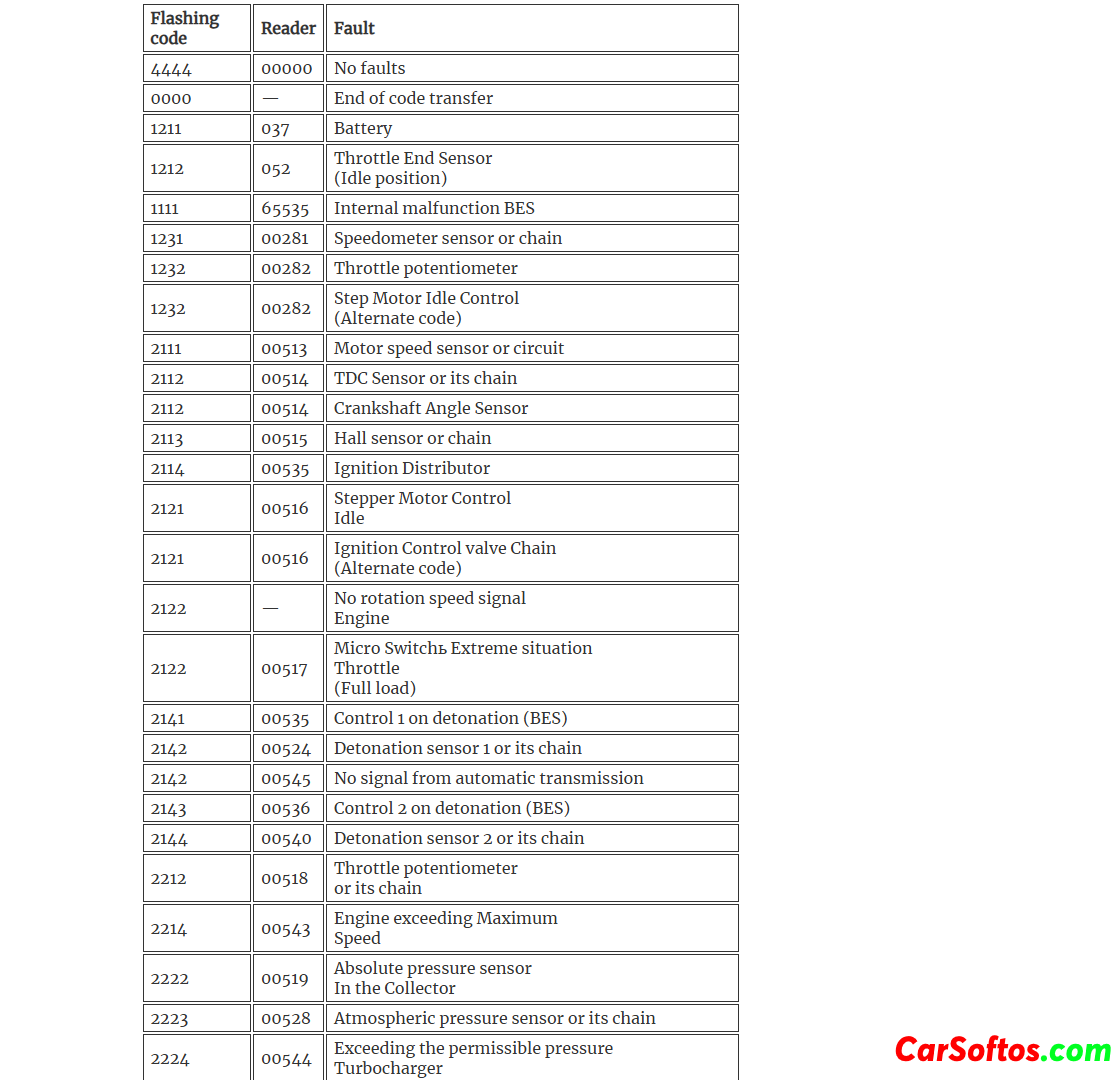
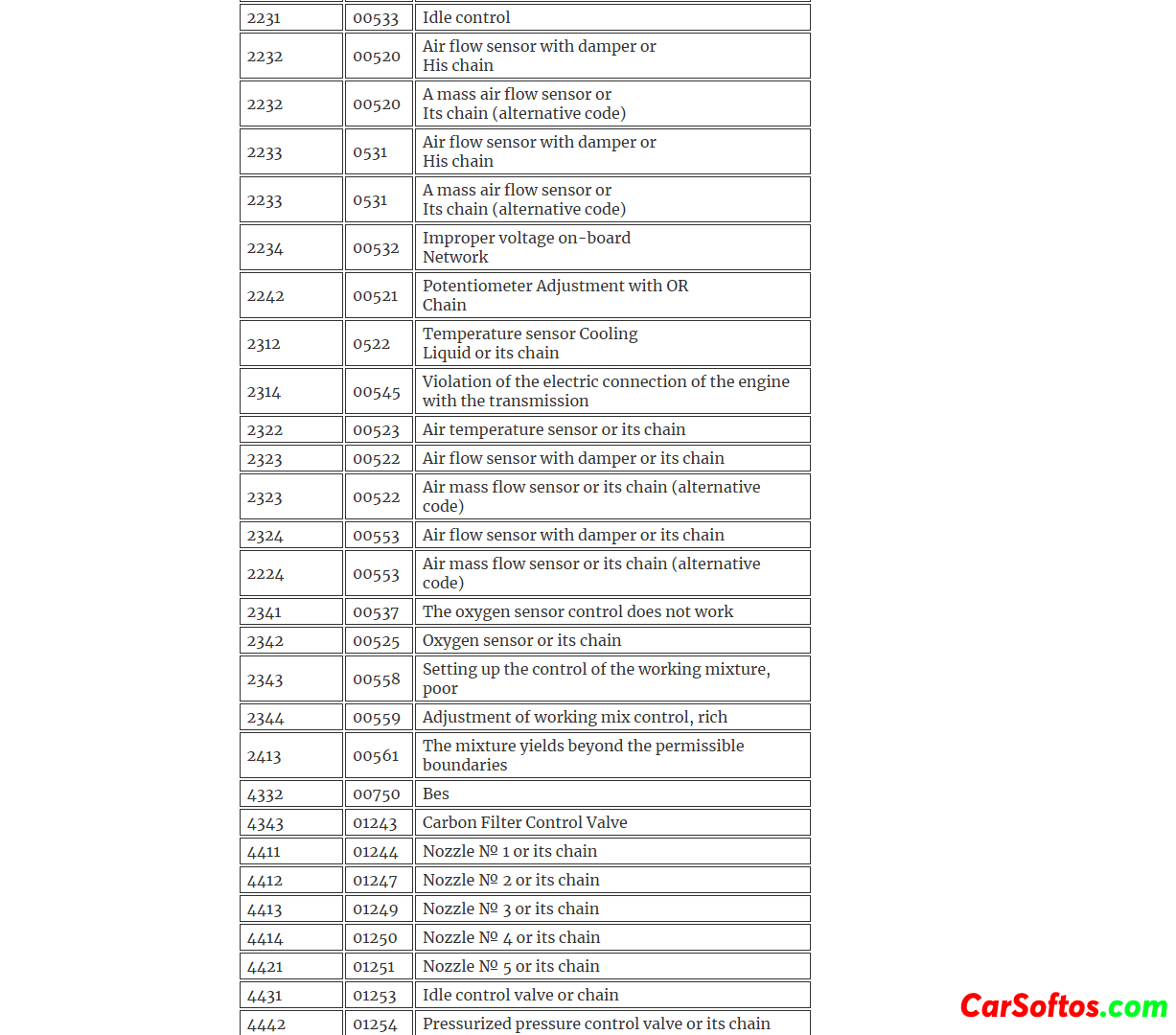
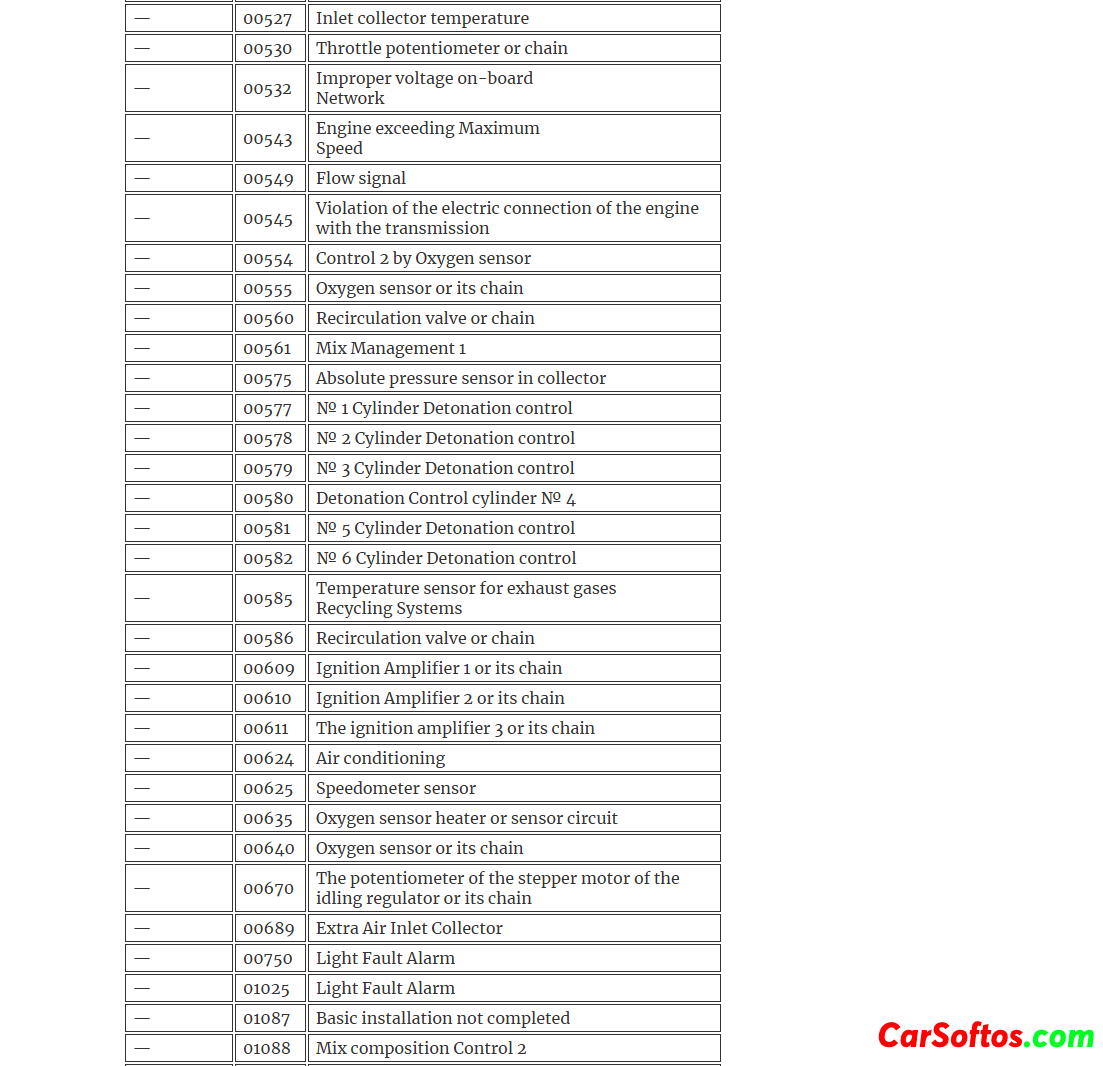
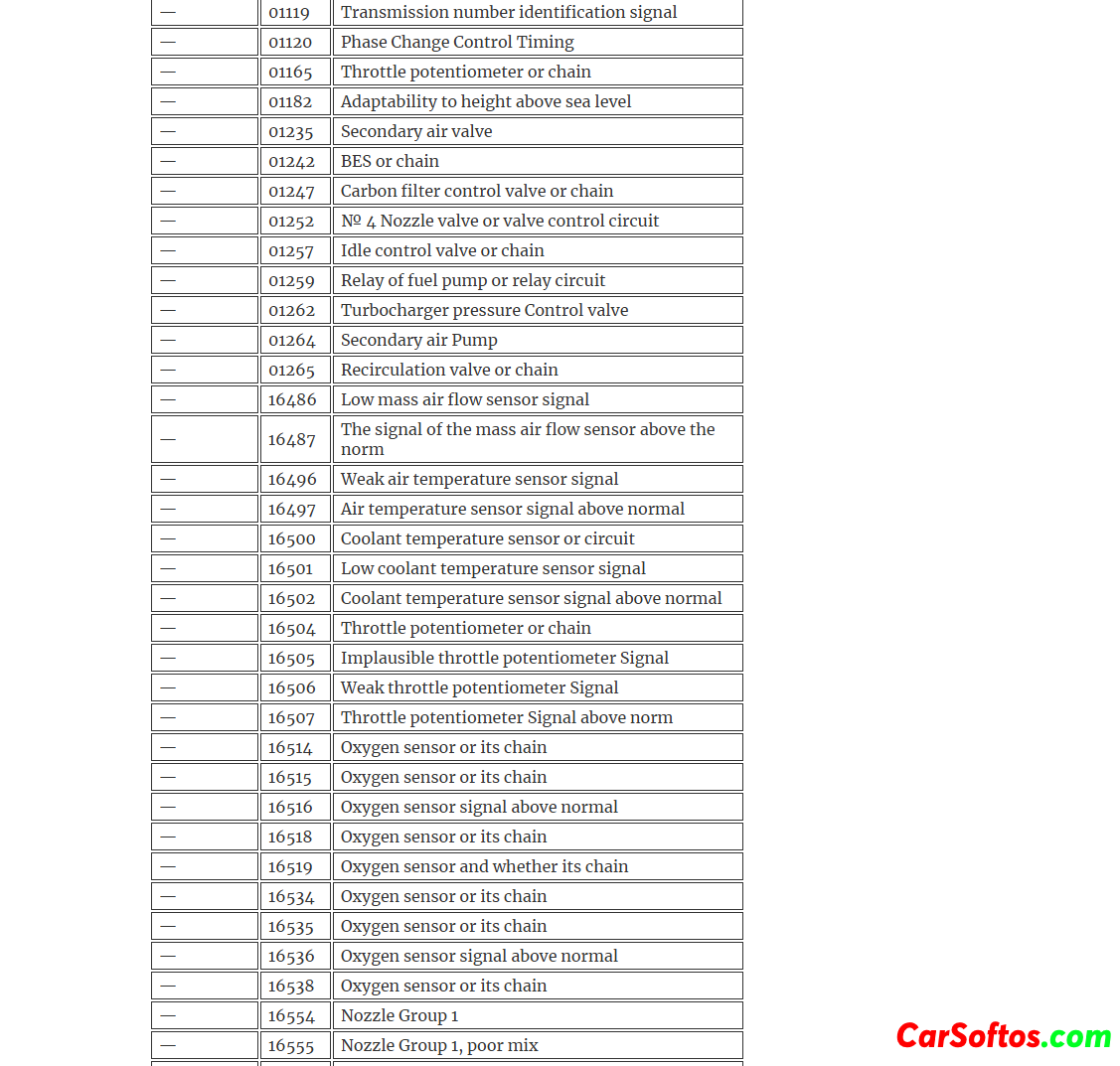
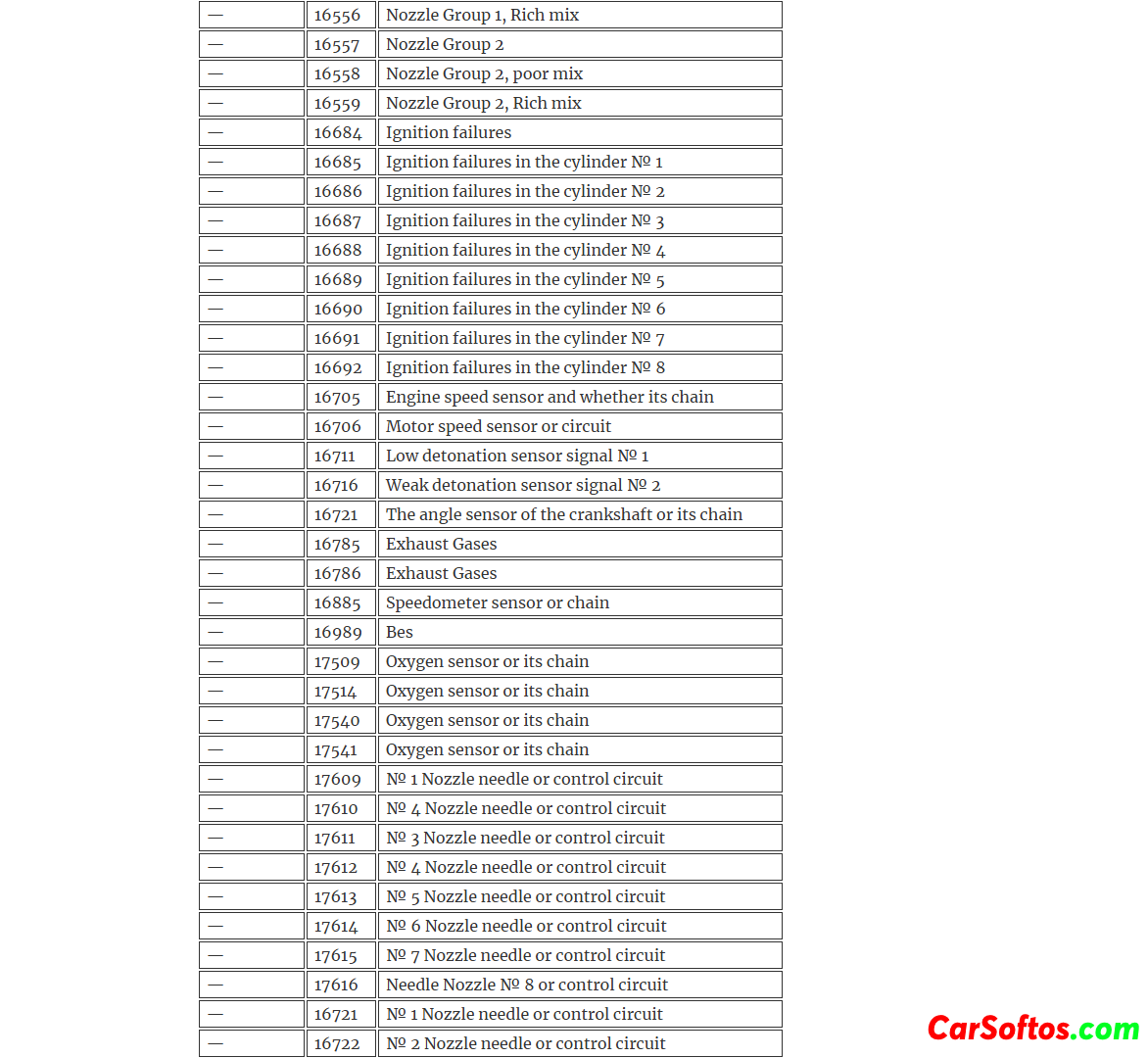
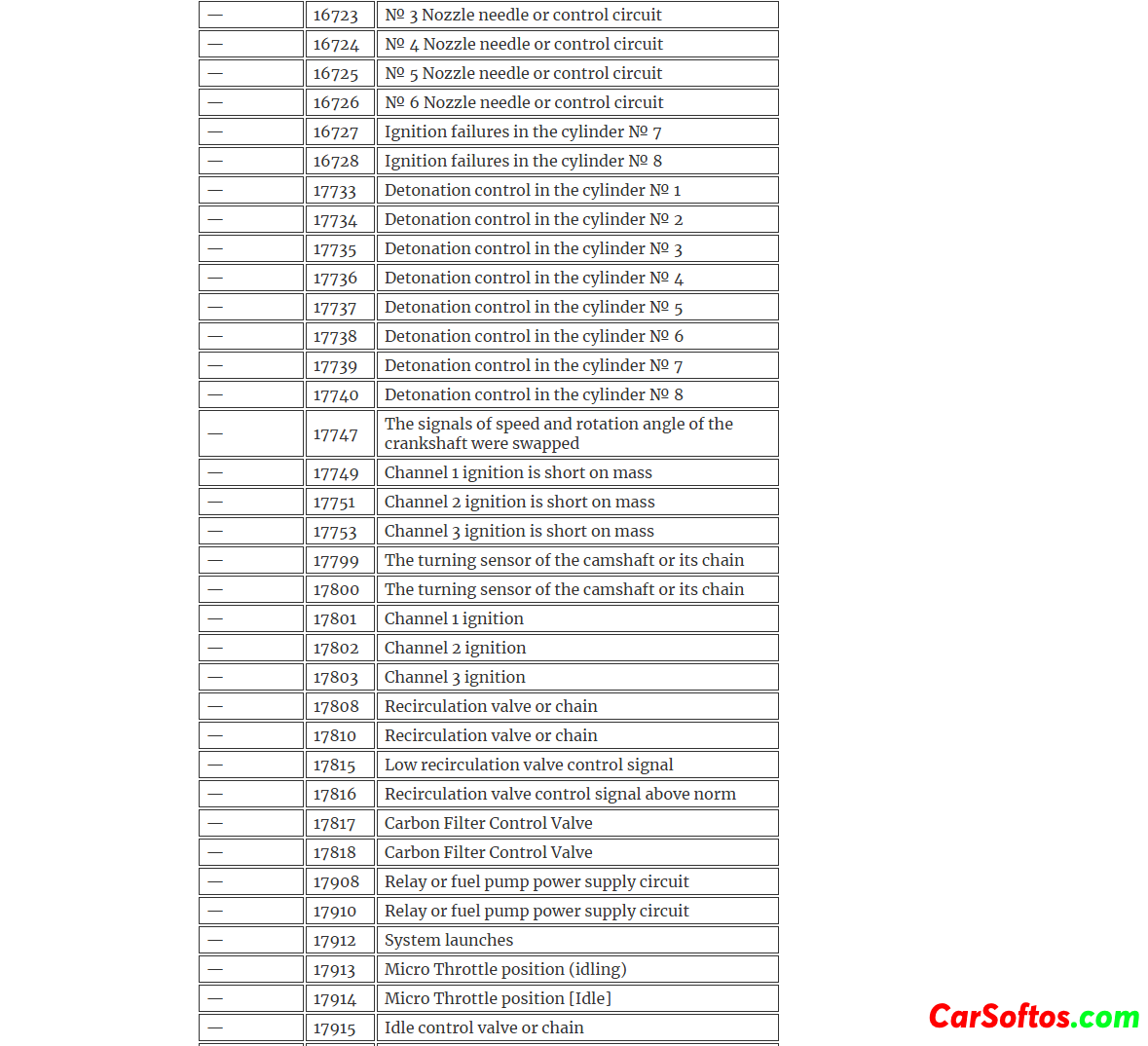
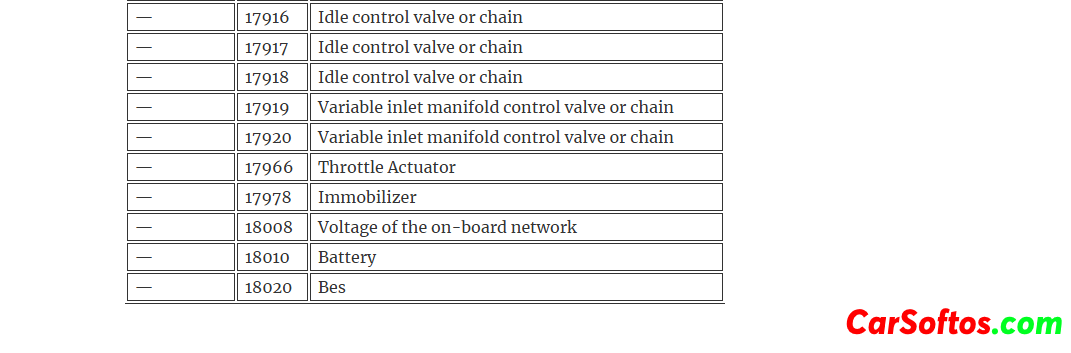
Audi Fault Codes List (Deciphering)

Tags:
Information
Users of Guests are not allowed to comment this publication.
Users of Guests are not allowed to comment this publication.