P0217 Trouble Code: Engine Coolant Over Temperature Condition Explained
15-04-2026, 22:25. Posted by: carsoftos777
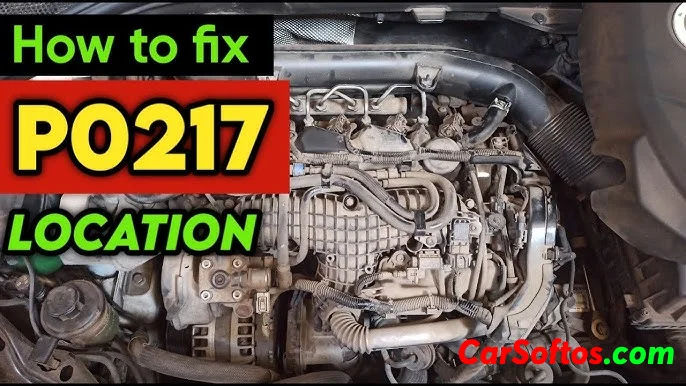
P0217 is the generic OBD-II code for Engine Over Temperature Condition or Engine Coolant Over Temperature Condition. Manufacturer and service references describe it as a code set when the ECM detects that coolant temperature has reached an overheat threshold. Hino’s service manual states P0217 is issued when an over temperature condition is detected, and another published reference notes the code is triggered at about 110°C / 230°F on that application.
👉 In simple words:
Your engine computer is saying:
- the engine is too hot
- the cooling system cannot control temperature normally
- continuing to drive may cause engine damage.
⚠️ How Serious Is P0217?
Severity: ⭐⭐⭐⭐⭐ (Very High)
P0217 is one of the more urgent powertrain codes because it indicates an overheating event, not just a weak sensor signal. Recent repair references describe it as a code that should not be ignored because severe overheating can damage the head gasket, cylinder head, engine oil, and sometimes the catalytic converter or turbo on some vehicles.
🚫 Can you keep driving?
Usually no — or only enough to get safely off the road.
If the gauge is pegged hot, steam is coming out, or the overheating warning is active, the safest move is to stop driving, switch off A/C, pull over safely, and shut the engine down once you are stopped. That advice is consistent with overtemperature guidance and with the meaning of P0217 itself.
🚨 Common Symptoms of P0217
Typical symptoms include:
- ⚠️ Check Engine Light
- ⚠️ coolant temperature gauge in the red
- ⚠️ overtemperature warning on the dash
- ⚠️ steam or hot coolant smell
- ⚠️ reduced power or limp mode on some vehicles
- ⚠️ radiator fans running constantly or not running when they should
- ⚠️ knocking, rough running, or shutdown behavior in more severe cases.
🔥 Real-world clue:
If the car overheats mostly in traffic or at idle, suspect the radiator fan or airflow problem. If it overheats at highway speed, suspect low coolant, thermostat, water pump, restriction, or head-gasket-related cooling issues. This is an inference from common overheating patterns and the cooling-system causes listed in repair sources.
🧠 Most Common Causes of P0217
1️⃣ Low coolant / coolant leak — very common
A low coolant level reduces the system’s ability to carry heat away from the engine. Recent P0217 repair references list coolant leaks as one of the top causes, and Ford service information also instructs technicians to check coolant level when overheat-related codes are present.
2️⃣ Thermostat stuck closed
If the thermostat does not open properly, hot coolant cannot circulate through the radiator fast enough, so engine temperature rises quickly. Thermostat failure is repeatedly listed among the most common P0217 causes.
3️⃣ Cooling fan failure
A bad fan motor, fan controller, relay, or wiring can cause overheating, especially at low speed or in traffic. Ford service content specifically ties overheat conditions to cooling-fan-related faults on some applications.
4️⃣ Water pump problem
If the pump cannot circulate coolant properly, temperature rises fast. Recent P0217 references list failed or weak water pumps among the key causes.
5️⃣ Clogged radiator or poor coolant flow
A restricted radiator or poor flow through the cooling system can reduce heat transfer enough to trigger P0217. Diagnostic references list clogged cooling systems and poor flow as common causes.
6️⃣ Head gasket / combustion leak into cooling system
If combustion gases enter the cooling system, temperature can spike, coolant can be pushed out, and repeated overheating may result. Some Ford overheat bulletins mention coolant loss, white smoke, and cooling-system component faults as part of the overheating diagnosis path.
7️⃣ Faulty coolant temperature reading
This is less common than true overheating for P0217, but a bad ECT reading can confuse diagnosis on some vehicles. Still, P0217 is much more of a real overheating code than P0116/P0117/P0118.
🌡️ Why P0217 Is Different From P0116 / P0117 / P0118
This is important for SEO and for helping readers avoid wrong repairs.
- P0116 = coolant temp signal behaves implausibly
- P0117 = coolant temp signal too low
- P0118 = coolant temp signal too high
- P0217 = the engine is detected as actually overheating.
That distinction follows from the basic code definitions and service references.
👉 Simple explanation:
P0116–P0118 are usually sensor/circuit-side faults.
P0217 is usually a real cooling-system fault until proven otherwise.
🔧 Step-by-Step Diagnosis
1️⃣ Confirm the overheat event with scan data
Check:
- stored P0217
- freeze-frame data
- coolant temperature at the time the code set
- any related fan, thermostat, or coolant-level symptoms.
2️⃣ Check coolant level first
Before replacing parts, inspect the coolant reservoir and, when safe and fully cooled, the radiator level if applicable. Ford service guidance for overheat-related faults explicitly includes checking coolant level early in diagnosis.
3️⃣ Look for obvious leaks
Check for:
- wet hoses
- crusty coolant residue
- thermostat housing leaks
- radiator leaks
- water pump seepage
- coolant smell around the engine bay.
Leak-related coolant loss is one of the top documented causes of P0217.
4️⃣ Test fan operation
Let the engine reach operating temperature while monitoring safely. If the fans do not come on when expected, the fan system becomes a top suspect, especially for overheating in traffic. Ford’s fan-related bulletin shows how important this path can be.
5️⃣ Evaluate thermostat behavior
A stuck-closed thermostat often causes rapid overheating after startup. If the upper radiator hose stays cool too long while engine temperature rises fast, thermostat restriction is likely. This is a mechanical inference supported by thermostat being a top documented cause.
6️⃣ Check coolant circulation / water pump
If coolant level is correct and the fan works, weak circulation becomes more likely. A slipping impeller, worn pump, belt problem, or internal blockage can cause P0217.
7️⃣ If overheating repeats, test for head-gasket-related pressure problems
Repeated coolant loss, bubbling, white smoke, oil contamination, or unexplained pressure buildup point toward deeper engine problems. Ford’s overheat-related bulletin highlights coolant loss and white smoke as important clues in certain applications.
🛠️ How to Fix P0217
✔️ Repair coolant leaks
If coolant is low because of a leak, that must be fixed before anything else. Otherwise the code will come back.
✔️ Replace the thermostat
If the thermostat is stuck closed or opening incorrectly, replacement is often the correct fix. Thermostat failure is one of the most repeatedly cited causes of P0217.
✔️ Repair the radiator fan system
A failed fan, relay, wiring issue, or control module fault can cause P0217 at idle and low speed. Ford service info supports this path directly.
✔️ Replace the water pump if flow is weak
Water pump failure is a classic overheating cause and is commonly listed in P0217 diagnostics.
✔️ Flush or repair a restricted radiator / cooling system
If flow is poor, the engine may still overheat even with a working fan and thermostat.
✔️ Address deeper engine faults if combustion gases are entering the cooling system
If the real cause is internal engine damage, no thermostat or sensor will solve it.
💰 Typical Repair Cost
Practical market-style estimates:
| Repair | Typical cost |
|---|---|
| Coolant top-up / bleed | $50–$180 |
| Small hose or leak repair | $50–$250 |
| Thermostat replacement | $120–$450 |
| Cooling fan repair | $150–$700 |
| Water pump replacement | $250–$900 |
| Radiator replacement | $250–$900 |
| Major engine repair / head gasket | $1,000–$4,000+ |
These are broad market estimates, not flat-rate factory pricing. The big cost swing depends on whether the cause is a simple cooling-system part or a major engine problem. That conclusion follows from the documented cause list for P0217.
❗ Common Mistakes
❌ Clearing the code and continuing to drive
This is one of the worst mistakes with P0217. Overheating can damage the engine fast.
❌ Replacing the sensor first without confirming real overheating
P0217 is usually not a simple sensor code. It is much more often a real cooling-system issue.
❌ Ignoring low coolant
Even a small coolant leak can be enough to trigger overheating under load or in traffic.
❌ Blaming the thermostat without checking the fan
If the car only overheats at idle, the fan system may be the real issue. That is an inference based on cooling-system behavior and fan-related service guidance.
⚖️ P0217 vs Related Codes
P0217
Engine over temperature condition — the engine is detected as overheating.
P0125
Engine does not warm up enough for closed-loop fuel control — usually a too-cold / warm-up problem.
P0128
Coolant thermostat below regulating temperature — often a thermostat-open / running-too-cool problem.
P0117 / P0118
Coolant temperature circuit low/high input — usually sensor/circuit-side faults.
👉 Simple explanation:
- P0217 = engine too hot
- P0125 / P0128 = engine too cold
- P0117 / P0118 = temp signal fault
🚗 Can You Drive With P0217?
Only enough to get somewhere safe — not as normal driving.
If the temperature warning is active, steam is visible, or the gauge is in the red, continuing to drive risks major engine damage. The safe move is to reduce load, stop safely, and shut the engine down once stopped.
📌 Final Verdict
P0217 usually means the engine has actually overheated, not just that a sensor reading looks strange. The most common real causes are low coolant, thermostat failure, cooling-fan failure, water-pump problems, radiator restriction, or deeper cooling-system / engine issues.
come back