P0117 Code — Engine Coolant Temperature Circuit Low Input (Causes, Symptoms & Fix Guide)
15-04-2026, 12:43. Posted by: carsoftos777
P0117 is the generic OBD-II code for Engine Coolant Temperature Circuit Low Input. Factory service information describes it as a condition where the ECM sees the ECT sensor signal voltage as too low. Because the ECT sensor is a thermistor, a very low signal voltage usually makes the computer interpret the engine coolant temperature as extremely hot, even if the engine is actually cold.
👉 In simple words:
The ECU thinks:
- the coolant temperature signal is too low
- so the engine must be too hot
- or the sensor circuit is being pulled low by a wiring fault.
That is why P0117 is often caused by:
- a bad coolant temperature sensor
- a short to ground in the signal wire
- connector corrosion or damage
- less often, a cooling-system issue that really is causing overheating.
⚙️ How the ECT Sensor Works
The engine coolant temperature sensor is usually a two-wire thermistor supplied with a reference voltage from the ECM. As coolant temperature rises, sensor resistance changes and the voltage on the signal circuit changes with it. Toyota service information notes that the ECT sensor is a thermistor, and Mitsubishi diagnostics for P0117 specifically instruct technicians to check for a short to ground and sensor-circuit problems.
The ECU uses coolant temperature for:
- cold-start fueling
- ignition and idle strategy
- radiator fan logic
- emissions control
- fail-safe decisions.
When P0117 sets, Toyota service information says the ECM may enter fail-safe mode and substitute a default coolant temperature value, rather than trusting the real sensor reading.
⚠️ How Serious Is P0117?
Severity: ⭐⭐⭐⭐☆ (Medium to Medium-High)
P0117 is usually not “stop immediately or the engine explodes,” but it is also not harmless. If the ECM believes the engine is extremely hot because the signal is stuck low, it may change fueling, fan operation, and drivability strategy. In some cases the code is caused by a real overheating condition; in others, the engine is not actually overheating at all and the issue is purely electrical.
👉 The real danger is that P0117 can mean two very different things:
- a false hot reading from a bad circuit
- or a real cooling-system problem that should not be ignored.
🚨 Common Symptoms of P0117
Typical symptoms can include:
- ⚠️ Check Engine Light
- ⚠️ cooling fans running constantly on some vehicles
- ⚠️ poor fuel economy
- ⚠️ hard starting, especially cold
- ⚠️ rough running or rich operation
- ⚠️ temperature gauge reading unusually high or behaving abnormally
- ⚠️ in some cases, overheating symptoms if the engine truly is hot.
🔥 Important nuance:
If the engine is actually cold but the scanner says coolant temperature is already very high, that strongly points to sensor or wiring, not thermostat. If the engine really is overheating, then the low-input code may be reflecting an actual cooling problem.
🧠 Most Common Causes of P0117
1️⃣ Faulty engine coolant temperature sensor
This is one of the most common causes. Toyota and Mitsubishi factory-style diagnostics both include the ECT sensor itself as a primary suspect for P0117.
2️⃣ Short to ground in the signal wire
Mitsubishi’s diagnostic procedure for P0117 explicitly checks for a short circuit to ground between the ECT sensor connector and the ECM. This is one of the clearest manufacturer-backed causes of a low-input code.
3️⃣ Damaged or corroded connector
A poor connector can pull the signal low or create unstable readings. Ross-Tech and Mitsubishi references both highlight wiring and connector faults for P0117.
4️⃣ Mechanical cooling-system problem
Ross-Tech specifically lists mechanical problems in the cooling system as a possible cause. That means P0117 is not always just electrical; real overheating can sometimes be part of the picture.
5️⃣ Rarely, ECM fault
Mitsubishi service info includes the ECM as a possible cause, but only after sensor and wiring checks are completed first.
🌡️ Why P0117 Gets Misdiagnosed
A lot of people see “coolant temp sensor low input” and assume the engine is running too cold. That is not what P0117 means.
👉 Very important distinction:
- P0117 = low voltage signal
- low voltage on an ECT thermistor circuit usually means the ECU interprets the engine as too hot
- P0125 / P0128 are the codes more often associated with an engine staying too cold.
So if someone replaces the thermostat first for P0117 without checking live data and wiring, they may waste money. The smarter first step is to see whether coolant temp on the scanner is implausibly high from a cold start.
🔧 Step-by-Step Diagnosis
1️⃣ Scan all codes first
Check whether P0117 appears by itself or with related codes like:
- P0115 — ECT circuit malfunction
- P0116 — ECT range/performance
- P0118 — ECT circuit high input
Toyota diagnostic charts treat these as part of the same ECT family and often direct the technician toward the most basic circuit fault first.
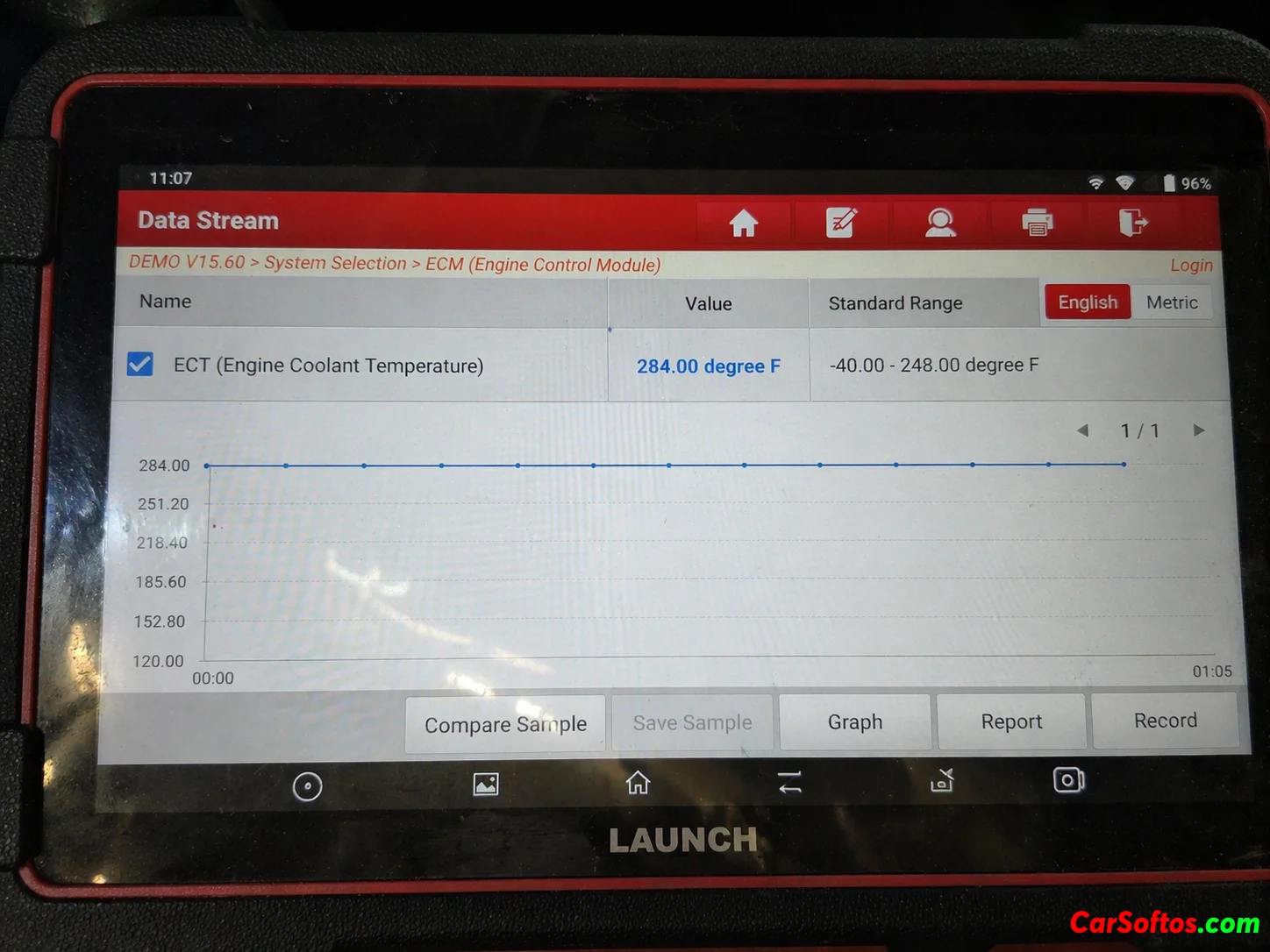
2️⃣ Check live coolant temperature with a cold engine
This is one of the best first checks.
If the engine has sat overnight, coolant temperature should be close to ambient air temperature. If the scanner shows something extreme right away, such as a temperature that is far too high for a cold engine, that is a major clue pointing to the ECT circuit. Toyota service info specifically tells technicians to inspect coolant-temp data in the scan tool data list.
3️⃣ Inspect the sensor and connector
Look for:
- green corrosion
- coolant intrusion
- broken lock tab
- damaged insulation
- signs the wire has rubbed through and touched metal.
4️⃣ Check for short to ground
This is a load-bearing diagnostic step. Mitsubishi’s service information for P0117 directly instructs checking for a short circuit to ground between the sensor connector and the ECM.
5️⃣ Decide whether the engine is really overheating
If the engine actually is overheating, you cannot stop at the sensor. You need to inspect:
- coolant level
- fan operation
- thermostat
- water pump / flow issues
- air trapped in the system.
Ross-Tech’s reference explicitly allows for mechanical cooling-system causes, so this step matters.
6️⃣ Verify repair with live data
After repair, the coolant temperature should now read plausibly from cold start and warm up normally. Toyota service material indicates the monitor runs continuously and fail-safe will end once a pass condition is detected.
🛠️ How to Fix P0117
✔️ Replace the ECT sensor
If wiring and connector checks are good and the signal is still stuck low, the coolant temp sensor is a common fix.
✔️ Repair the wiring or connector
If the signal wire is shorted to ground or the connector is corroded, repair can solve the code completely without replacing major parts.
✔️ Fix the real overheating problem
If the engine is truly overheating, you may need to repair the cooling system rather than the sensor circuit alone. Ross-Tech’s guidance explicitly includes mechanical cooling-system problems.
✔️ Rarely, diagnose the ECM
Only after the sensor, connector, wiring, and cooling system are checked should the ECM be considered.
💰 Typical Repair Cost
Practical market-style estimates:
| Repair | Typical cost |
|---|---|
| Coolant temp sensor | $40–$180 |
| Connector repair / cleaning | $20–$100 |
| Wiring repair | $20–$200 |
| Cooling-system diagnosis / repair | $80–$500+ |
| Advanced diagnosis | $80–$180 |
These are practical market ranges, not manufacturer flat-rate pricing. The biggest cost swing comes from whether P0117 is just a sensor-circuit fault or whether it reflects a true overheating issue. That cost framing is an inference from the manufacturer-supported cause list.
❗ Common Mistakes
❌ Replacing the thermostat first
That is a much more common mistake with P0125 / P0128 than with P0117. For P0117, the first high-value checks are sensor signal, connector, and short-to-ground testing.
❌ Ignoring live-data checks
If you do not check coolant temperature on the scanner with a cold engine, you can waste money fast. Toyota factory info explicitly points technicians to the data list.
❌ Assuming it is never a real overheating issue
Ross-Tech explicitly includes mechanical cooling-system problems as a possible cause, so P0117 is not always “just wiring.”
❌ Confusing P0117 with P0118
They are opposites:
- P0117 = signal too low
- P0118 = signal too high.
⚖️ P0117 vs Related Codes
P0117
ECT circuit low input — voltage too low, ECU usually interprets coolant temperature as too hot.
P0118
ECT circuit high input — voltage too high, ECU usually interprets coolant temperature as too cold.
P0116
ECT range/performance — the reading exists, but behaves implausibly.
P0125 / P0128
These are more about the engine not warming properly, usually thermostat-side problems.
👉 Simple explanation:
- P0117 = signal too low
- P0118 = signal too high
- P0116 = reading behaves wrong
- P0125 / P0128 = engine stays too cold
🚗 Can You Drive With P0117?
Sometimes, briefly — but diagnose it soon.
If the car still runs normally and there is no real overheating, short-term driving may be possible. But if the engine is truly overheating, the gauge is high, or the cooling fans are behaving abnormally, the car should be checked immediately. The key issue is deciding whether the fault is electrical only or a real cooling-system problem.
📌 Final Verdict
P0117 usually means the ECM is seeing a coolant-temperature signal voltage that is too low. The most common real causes are a bad ECT sensor, a short to ground in the signal circuit, connector corrosion, or wiring damage. Less often, the code can also reflect a real cooling-system problem that is causing actual overheating.
come back